 Jennifer Goldberg
Roosevelt Row has been incubating Phoenix’s art scene for longer than I’ve been alive. Every time I’ve complained that First Friday isn’t what it used to be, another local groans that they’d been saying the same thing long before I ever considered the thought.
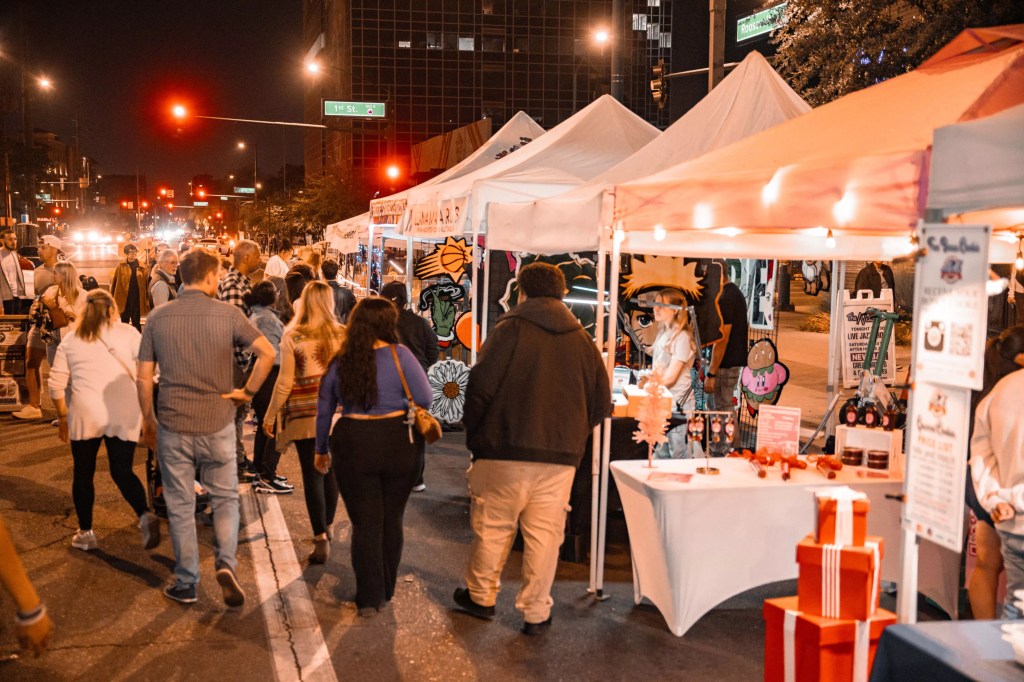
But the latest change to First Friday — announced in April by the Roosevelt Row Community Development Corporation, the body that runs the monthly night of art and commerce — has me wondering if this time it may be different. Beginning with tonight’s First Friday, the streets of downtown Phoenix will remain open to vehicle traffic instead of the bustling crowds of visitors that usually fill the street from curb to curb this time of month. In addition, and arguably more significantly, there will not be any vendors setting up along Roosevelt Street or the adjacent blocks like Second Street that housed the food truck alley for the event.

First Friday will never be what it used to be. For that to really resonate though, let’s peel back a few layers of paint and look at what it once was. Because if the only First Friday you know is the outdoor mall of recent years, you may not fully appreciate what a gloriously strange jungle it used to be.
Every month, for one exhilarating night, curation blended with chaos, and it was all free for anybody who wanted to attend. You didn’t see jumbo custom-branded canopy tents or 5,000-watt fume-belching generators powering stadium-ready floodlights. Instead, you saw the weirdest, most creative minds in town coming together for their own version of show-and-tell.
In the mid to late 2000s, areas like the dirt lot on Fifth Street south of the “graffiti house” hosted an enclave of fire performers spinning props and dancing. Down the way, on the corner of Second and Roosevelt, was a plush section of grass where you could plop after walking around in the heat. The lawn was usually swarmed, but not so crowded that my friends and I couldn’t sit and share a snack. We knew local bands like The Color 8, who would host a makeshift hardcore show on that same lot, wailing on the saxophone and heavy bass right up until noise curfew for sweaty teenagers who moshed on a street corner beside the galleries and their pristine white walls.
The night offered open arms to musicians, artists, makers and unapologetic oddballs of the Valley to come and do their thing, no matter what that “thing” might be. Busking musicians, bands and live painters were sprinkled between galleries and the bungalow-style houses.
It was not uncommon to see an artist spread a dropcloth on the sidewalk, unfold a lawn chair and quietly offer paintings for sale. Other artists brought scraps of wood to paint on. Often, we could hear a musician ahead of us on the next street corner long before we could see them, their sound in the distance bringing me a sense of delightful anticipation. I have eavesdropped on tarot card readings done on a folding table draped in a velvety fabric as old as I was.
The night was informal, loose. Every turn down a new street felt like a chance to discover a new artist, a new song. That sense of discovery led my friends and me to explore for hours. We loved it.
First Fridays had me hooked in high school. Each month, until I was old enough to drive myself, I’d beg my dad to take me downtown. It felt like every gallery along and near Roosevelt hosted exhibitions from formal artworks to unconventional, eye-opening experiments. It dawned on me that living for the purpose of creating was an option, one that people were actively pursuing all around me, in my own city. I didn’t have to go to New York or L.A. or anywhere else, like in the movies. That creative scene was right here in Phoenix. And First Friday was its heartbeat.
Constantly evolving
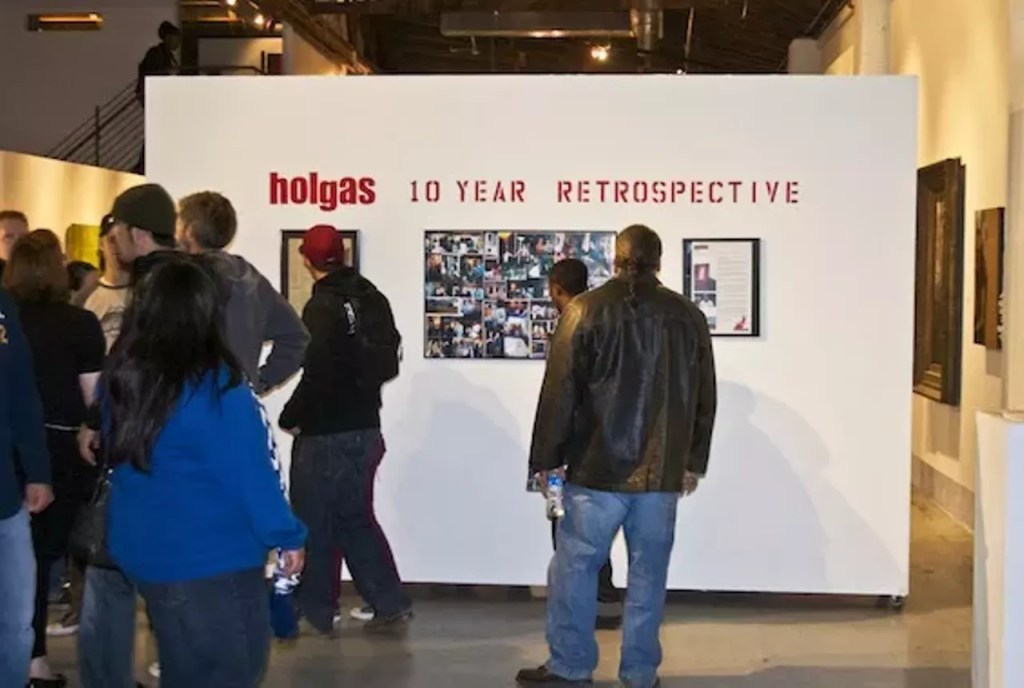
First Friday has evolved from a hodgepodge of house shows, galleries and DIY venue spaces in the early 1990s into the hyper-regulated street fair and “art walk” of recent years. Waggish artists have organized funerals for First Friday, complete with processions and eulogies to mourn the gentrifying arts district.
Those changes really were gradual. In my early 20s, I saw more people pouring in each month with a sense of excitement — maybe Phoenix had more weirdos than I had given it credit for? Then, over time, so many of the galleries around Roosevelt Street kept closing or leaving. Restaurants and bars popped up in their place. Artists tried to cling to their spaces as the neighborhood mutated further from its arts-focused roots into a “luxury living and good eats district,” as Pete Petrisko, one of First Friday’s founders, cheekily phrased it more than 10 years ago.
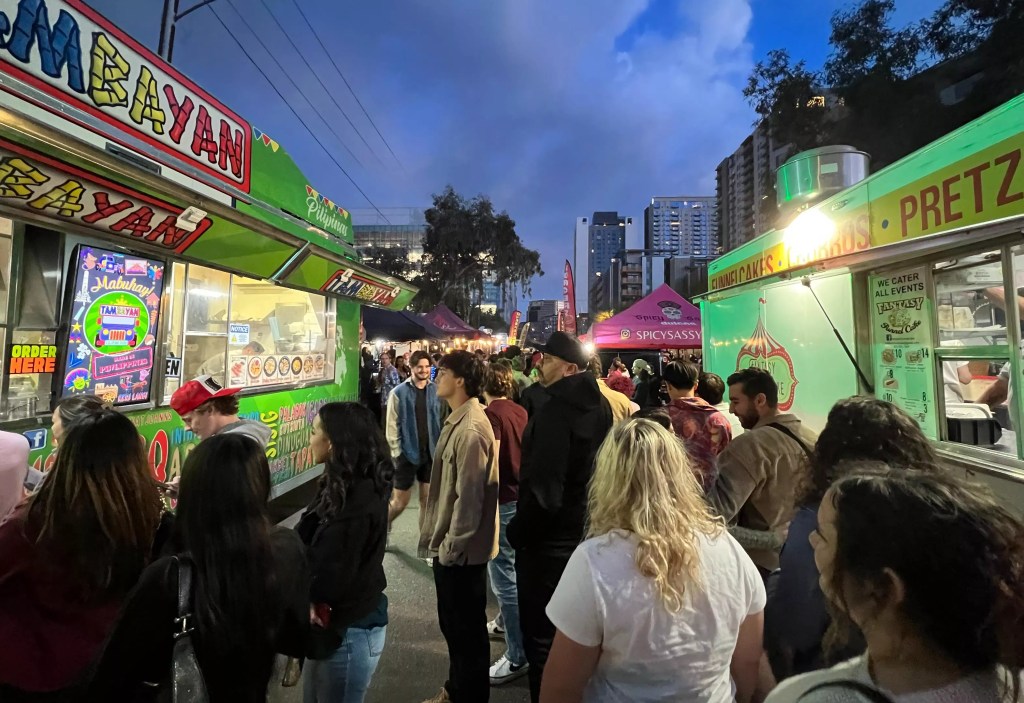
Still, the crowds ballooned. Street closures stretched farther each month as the event turned from a small, organic art night to a full-blown street fair. By 2023, the packed artwalk boasted over 200 booths, vendors and food trucks each month. Each month, the event can draw anywhere from 14,000 to 20,000 visitors, according to Artlink Phoenix. What was once a casual stroll through downtown morphed into a shoulder-to-shoulder river of people shuffling down Roosevelt in between rows of booths.
Some vendors at First Friday still carry the DIY spirit of yesteryear by bringing handcrafted goods and art. Yet others set up to resell mass-produced items purchased in bulk and 3D-printed trinkets. The application process and vendor fees can be a barrier that small artists have a hard time jumping over, but the elimination of the vendor market aspect of First Friday affects dozens of people who rely on revenue from the event.
“I don’t have the answers; I’m a rapper. But I’m a rapper who is involved in my community and to punish the local vendors, folks who make a significant amount of their monthly income at this event, feels wrong,” said local rapper and performer Nutter Tut. “It feels like an overcorrection or a Band-Aid solution and is guaranteed to yield long-lasting consequences if it becomes a mainstay policy.”
Nutter Tut grew up attending First Friday with his dad as a kid, much like many other artists and musicians on Roosevelt, and is approaching the change with uncertainty. “Until we see how this Friday plays out, I guess it’s not fair to judge. Maybe it surpasses expectations,” he said. (He can frequently be found performing during First Fridays at Bud’s Glass Joint with a changing lineup of musical guests on their patio along Fifth Street.)
Attending First Friday in recent months feels less like an exploration and more like a hustle. The seating area in the pavilion on Third Street has been fenced off during the event, like so many other open spaces or sitting areas the event has lost or blocked over time. “Give us your money and go home” seems to be the sentiment from the organizers when it comes to offering spaces where people can take a moment to relax.
Nowadays, Phoenix police seem to be the face of First Friday. The crowds are so large, so unwieldy, that cops now start dispersing thousands of people at the stroke of 9 p.m. Families and groups have to quickly navigate their way out of downtown Phoenix. This is a tense and, at times, panicked process. People get in fights. In March, two people got shot at First Friday.
Naturally, the Roosevelt Row CDC cited these recent incidents when they announced the changes for May. To longtime residents and artists like me, their new restrictions feel like a knee-jerk reaction to their own manufactured issues. First Friday was healthier when it was smaller and more grassroots. Now thousands of people want to attend, and organizers are backpedaling. It doesn’t make sense. Would you throw a house party and just walk away just as soon as it got wild?
What now?
Maybe First Friday really is dead this time. If, in fact, it collapsed under its own weight, let us say another eulogy for its former renegade spirit. Then let’s imagine how we can reclaim it for the community who created it.
“The art will just move on. Uncontrollably. Take a wolf out of nature, it becomes a dog. The beauty of the beast exists because it’s out running wild.” said Mikey Butzine, local glass artist and longtime participant in the Phoenix art community.
First Friday isn’t over. You can’t stop the art from being made. You can’t contain artists. We will compulsively seek each other out and reach out across divides. Local artists and galleries developed this monthly scene to bring people downtown. They collaborated to make maps and guides to the venues hosting events in order to make their work accessible to those who wanted to explore. Their collective effort to fan the flames of this event 30 years ago started the wildfire that is First Friday as we know it today.
You still find that spark on First Fridays along Grand Avenue. That street’s blossoming art scene dates back to the ‘‘’90s, when the artists were displaced from the warehouse district south of downtown. They continue to have monthly activations, live muralists, changing vendors and open galleries. I wouldn’t be surprised to see more people gravitating to that area each month to engage with more organic art and intentional creative-focused spaces.
In its prime, First Friday wasn’t about packing 75 different food trucks into a mile of street closures. First Friday was rooted in seeing the culture of Phoenix come alive through the objects and sounds and feelings we create together. The core of the night was, and always has been, to discover new artists, new music, new people. And maybe to become an artist yourself.
Buy the weird art, take it home and hang it up right next to your new sense of belonging.
Source link
Jennifer Goldberg Phoenix First Friday artwalk isn’t ending — it’s evolving www.phoenixnewtimes.com
Phoenix New Times 2026-05-01 23:08:58
+



GIPHY App Key not set. Please check settings