 Julie Martin
Warming temperatures are intensifying allergy seasons.
ATLANTA — While millions of Americans are catching spring fever this week, many are also sniffling and sneezing due to seasonal allergies. And if it feels worse every year, that’s not your imagination. Warmer temperatures and earlier springs are making pollen explosions even more miserable.

“Warming temperatures are helping make allergy season start earlier, last longer and really just feel worse,” said Climate Central meteorologist Shel Winkley.
About one in four adults suffer from seasonal allergies
Climate Central, a nonprofit group of independent scientists and communicators, is out with new data that shows longer growing seasons due to warmer temperatures are not only lengthening pollen seasons — they are also intensifying them.
“In nearly nine in ten of the 198 U.S. cities analyzed, the freeze-free growing season has stretched about three weeks longer than it was back in the 1970s,” Winkley explained. “This gives plants more time to grow and release pollen, adding up to longer stretches of poor air quality for allergy sufferers.”
The biggest increases are in the northwest, where the season is about 31 days longer on average, and the southwest, which has gained about 22 days.
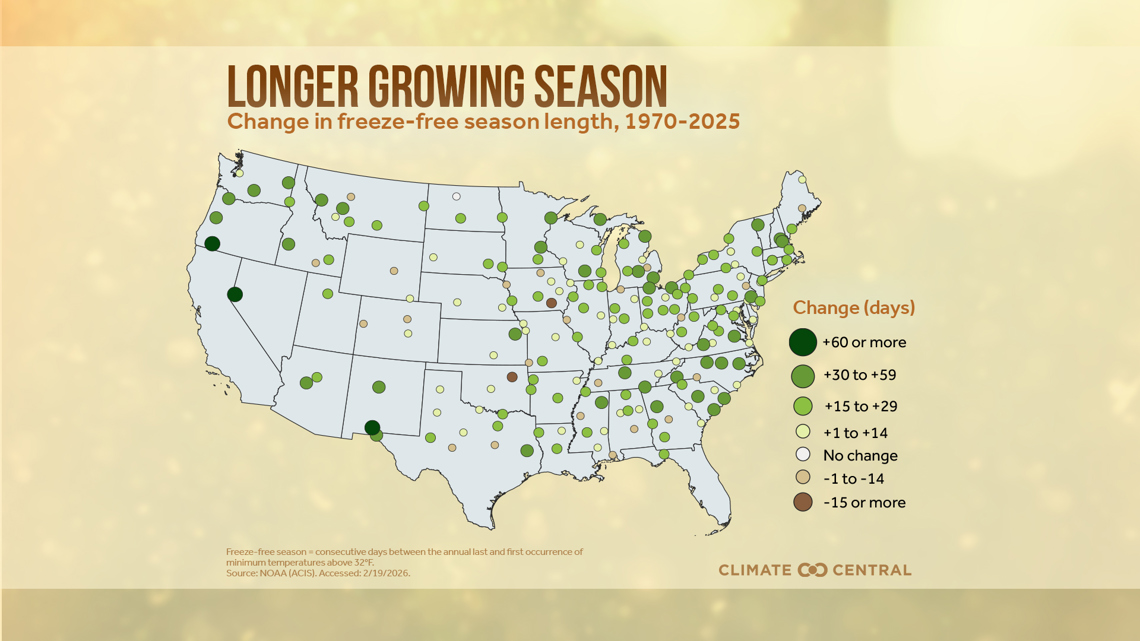
Seasonal allergies hit at different times depending on the type of pollen.
-
Tree pollen: Peaks in spring, especially in the east around late April. Deciduous trees like oaks, shrubs, and vines shed leaves annually and release allergenic pollen.
-
Evergreen pollen: Peaks in May in much of the east and west and can linger through summer in the northwest. In the south, winter cedar and juniper pollen (“cedar fever”) is common.
-
Grass pollen: Widespread across the U.S., lasting through spring and summer.
-
Ragweed pollen: Dominates fall, peaking in September and October. Found nationwide, ragweed thrives in cities and rural areas, and warmer falls can extend its season.
Climate Central says heat-trapping pollution also boosts pollen levels, and it is only likely to get worse. A 2022 study shows the U.S. could face up to a 200% increase in pollen production by the end of this century.
Longer, stronger allergy seasons pose health risks to kids
Longer allergy seasons are especially tough on children, especially those with conditions such as asthma. Climate Central reports about 1 in 5 U.S. children have seasonal allergies, and 6.5% have asthma, with allergic asthma most common in early childhood.
Parents can help by responding to symptoms rather than the calendar, limiting outdoor exposure when pollen is high, keeping indoor air clean with closed windows and HEPA filters, and supporting cuts to carbon pollution, which can reduce pollen overall.
As spring rolls on, allergy sufferers of all ages should pay attention to pollen forecasts and take steps to limit exposure.
Source link
Julie Martin Longer growing season means more pollen — and more misery www.12news.com
KPNX Arizona Local News Feed: weather 2026-03-05 17:22:25
weather,health,news,cct-tracking,syndication,top-of-funnel +



GIPHY App Key not set. Please check settings