 Julie Martin
One of the most beloved meteor displays of the year will hit its peak this weekend.
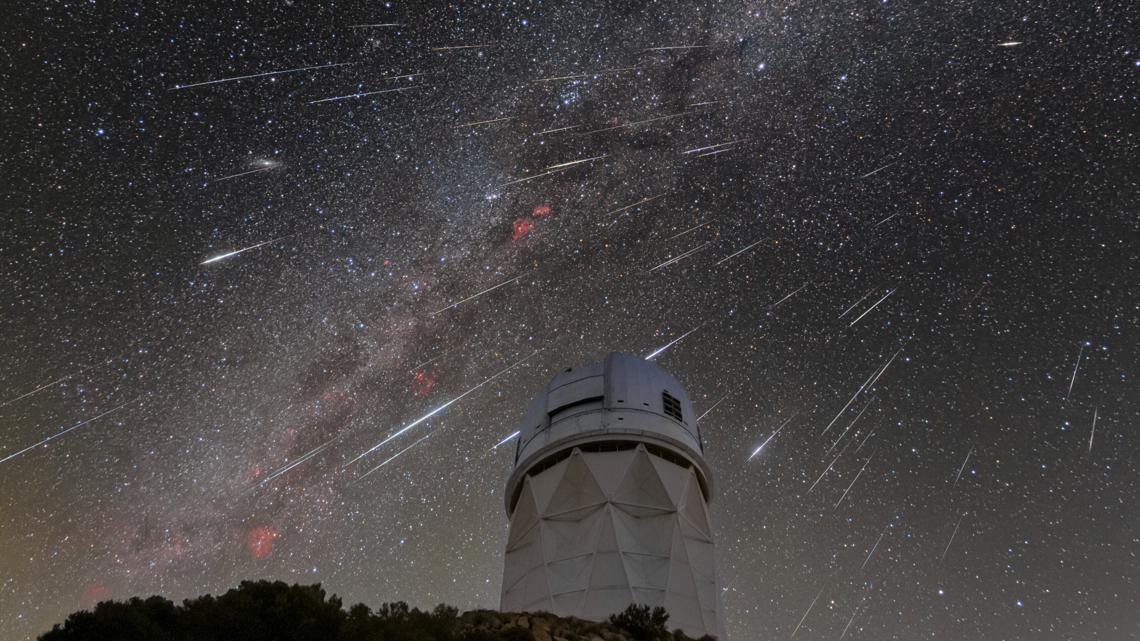
ATLANTA — Skywatchers are in for a treat this weekend as the Geminid meteor shower—one of the most beloved meteor displays of the year—reaches its peak.

Derrick Pitts, chief astronomer at The Franklin Institute, says this year’s show could deliver more than 100 meteors an hour under the right conditions.
“One of the coolest things about this is it’s one of the most prolific showers of the year,” Pitts said. “Observers under clear, dark skies might have the opportunity to see as many as 150 meteors per hour—far and away more than any other shower of the year.”
When to watch Geminid meteor shower
The Geminids will peak the night of Saturday, Dec. 13 into the early morning hours of Sunday, Dec. 14, though Pitts stresses that visibility improves as the night goes on.
“The later you go in the evening, the better your chances,” he said. That’s because the radiant—the point in the sky where the meteors appear to originate—continues to rise higher in the east as the night progresses.
But even early-night observers won’t miss out. “If you can’t be up late, just head out once the sky gets dark and look toward the east. You’re bound to see a few,” he said.
Why the Geminids happen
Unlike most meteor showers, which come from icy comets, the Geminids originate from an unusual source: the rocky asteroid 3200 Phaethon. Every December, Earth passes through a dense trail of dust and debris shed by the object over centuries.
“That dust has been distributed along its orbital path,” Pitts explained. “Every year the Earth passes through that path around the same time, and we see this meteor shower.”
Will the Moon interfere?
This year’s moon will be about 30% full during the meteor shower’s peak, which Pitts calls “manageable.”
“That means the skies won’t be as dark as they could be, but at least it’s only 30% and not 90% or 100%,” he said. While the moonlight may reduce the total meteors visible per hour, Pitts expects viewers will still see plenty—especially if they look away from the moonlit part of the sky.
Where to go for the best view for the Geminid meteor shower
As always, the darker the sky, the better the show.
“The best place to view any meteor shower is somewhere where the skies are clear and dark,” Pitts said. “The farther you get from bright city lights, the better your chances.”
A cloud-free sky is a must, but no special equipment is required.
What makes the Geminids so spectacular?
For many astronomy enthusiasts, the Geminids are a highlight of the year thanks to their brightness and reliability.
“When people go outside to look at some astronomical phenomenon, they actually want to see something,” Pitts said. “A meteor shower provides that opportunity—objects falling into the Earth’s atmosphere, streaking through the sky, sometimes looking like they’re coming right at you.”
Occasionally, a particularly bright or long-lasting meteor—called a fireball—adds extra excitement. But there’s no way to predict when one might appear, which Pitts says only adds to the anticipation.
Will any of the meteors reach the ground?
Not likely. Most Geminid meteors are tiny—often no bigger than grains of sand.
“They’re falling into the atmosphere about 40 miles up, and the intense heating and shock waves destroy them long before they reach the surface,” Pitts explained.
While microscopic dust from the shower does settle on Earth, a recognizable meteorite from the Geminids is extremely unlikely.
How to watch the Geminid meteor shower: No telescope needed
The Geminids are one of the most accessible celestial events of the year.
“All you need is a dark sky and your own eyes,” Pitts said. He suggests giving your eyes at least 30 to 40 minutes to adjust to the darkness.
He also recommends watching with others. “It’s always more fun with a group, and with more people looking in different directions, you increase your chances of spotting more meteors.”
Source link
Julie Martin Geminid meteor shower peaks this weekend: How to see it, what to expect www.12news.com
KPNX Arizona Local News Feed: weather 2025-12-12 17:26:55
weather,science,tech,cct-tracking,syndication,top-of-funnel +



GIPHY App Key not set. Please check settings