 Benjamin Leatherman
Phoenix neon signs have been part of the city’s visual DNA for decades.
Long before LED signage and digital billboards took over, glowing motel marquees, diner signs and towering roadside displays lit up the Valley’s major streets and highways during the dawn of car culture in the 1940s and 1950s. Most of those vintage signs have since disappeared, but neon hasn’t vanished from Phoenix.

Instead, it has evolved.
Classic signs still glow outside beloved local institutions. New neon installations shine outside cocktail bars, restaurants, music venues, arcades and hotels across the Valley. From midcentury holdovers along Main Street in Mesa to newer displays in midtown Phoenix and elsewhere, neon continues to define the city’s nightlife and street-level character.
Some signs are flashy. Others are weird, nostalgic or wonderfully over-the-top. A few have become landmarks in their own right.
Here are the 40 best neon signs around Phoenix right now.
Tracks in Wax Records
4741 N. Central Ave.
A glowing guitar-shaped neon sign once again lights up the front window at Tracks in Wax Records. New owner Joshua “Breezy” Briese uncovered the decades-old display in a back room after taking over the beloved midtown Phoenix vinyl shop in October 2025, then had the blue-and-yellow sign restored and rehung in the store’s front window where it beckons crate-diggers and audiophiles.
The Nash
110 E. Roosevelt St.
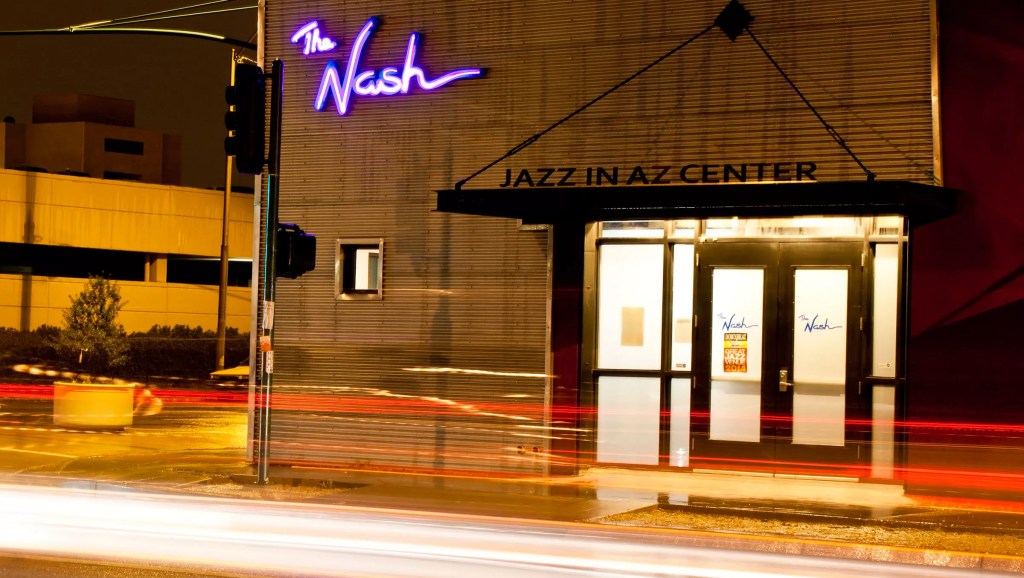
The glowing purple neon outside Roosevelt Row jazz venue The Nash feels ripped from another era. Designed by local architect Shawn Kaffer, who also created the venue itself and its logo, the sign channels the smoky cool of midcentury jazz clubs and bebop-era nightlife. At night, its bright purple glow spills onto Roosevelt Street like a beacon for downtown Phoenix music lovers.
Copper Star Coffee
4220 N. Seventh Ave.
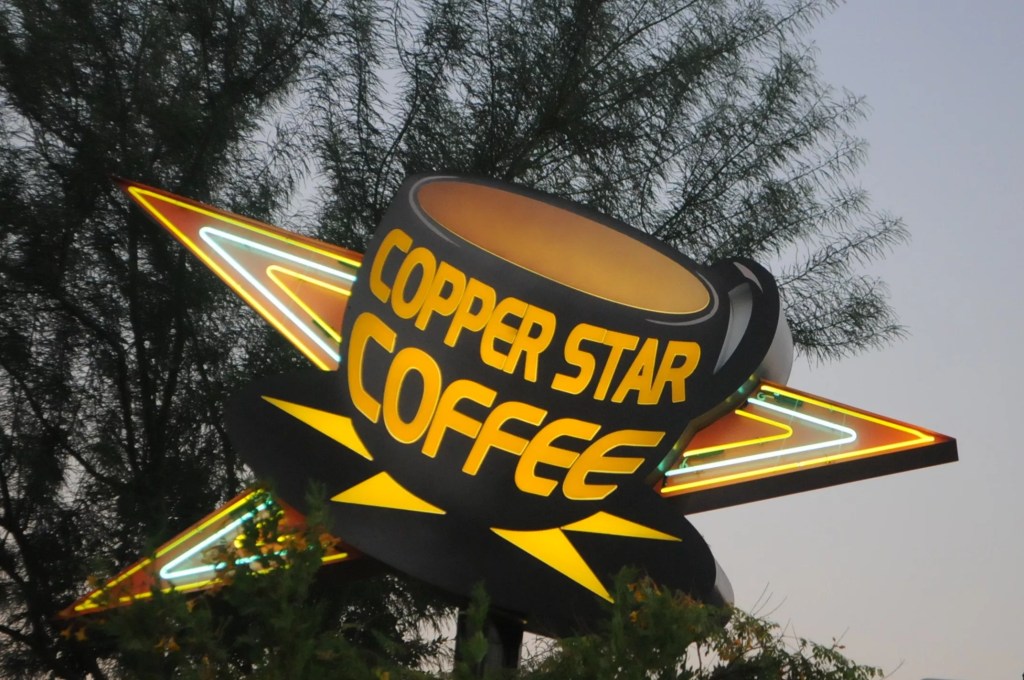
Copper Star Coffee’s glowing triangular neon sign is pure Melrose District energy. Operating out of a remodeled midcentury service station on Seventh Avenue, the longtime Phoenix coffee spot leans hard into retro cool. Even after the shop closes for the day, its blue-and-yellow neon continues glowing above the corner lot like a beacon for passing motorists and neighborhood regulars.
Valley Bar
130 N. Central Ave.
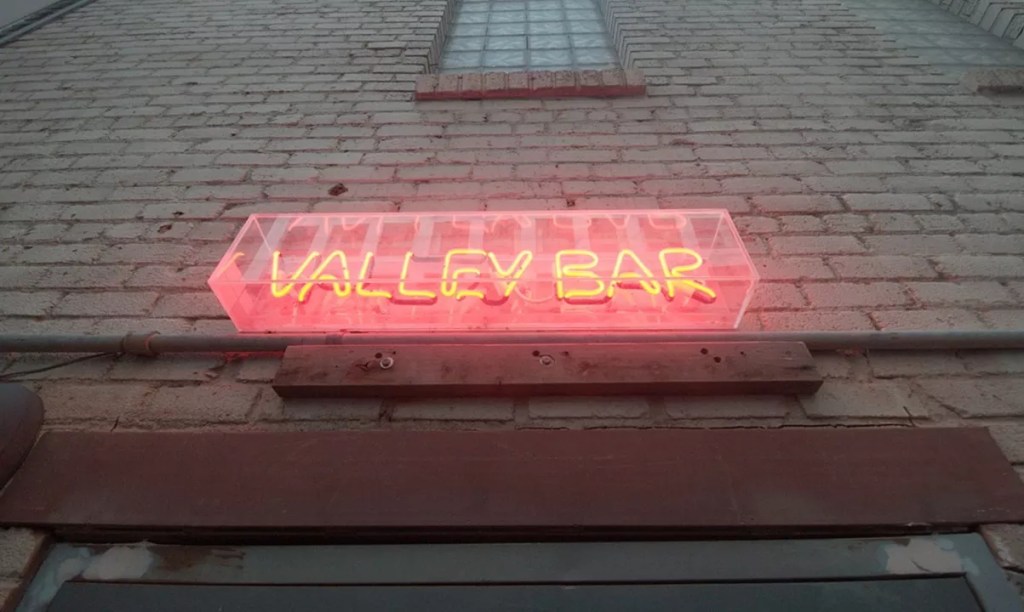
The neon sign perched above the alleyway entrance to downtown Phoenix’s Valley Bar is admittedly of a minimalist nature. Created by artist Sue Meyers of Bend-A-Light Studio, it simply spells out the name of the establishment in glowing red neon. Nothing more, nothing less. It accentuates the gritty feel of the Valley Bar’s exterior and is elegant in its simplicity.
Groggy’s Bar and Grill
2207 W. Main St., Mesa
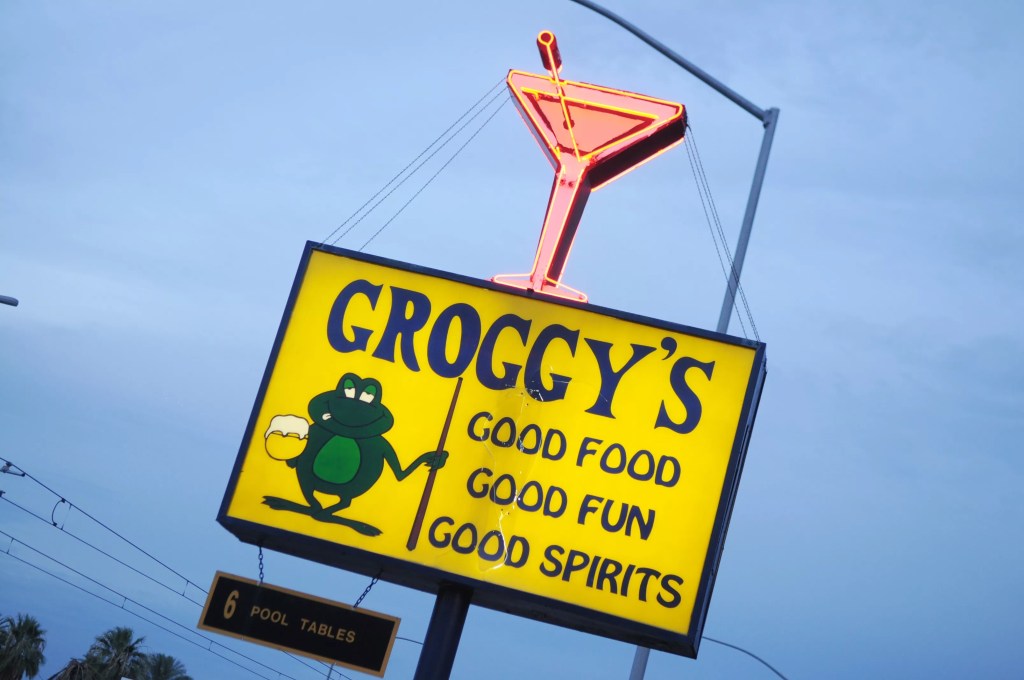
Groggy’s in Mesa hits up passersby with the hard sell via its circa-1980s sign, which sums up the neighborhood bar’s mix of food, fun, spirits and billiards while being adorned with a vintage-looking cocktail rendered in radiant neon. It’s acted like a boozy Bat-Signal for barflies over the past few decades for anyone in the mood to get as plastered as the cartoon frog located underneath.
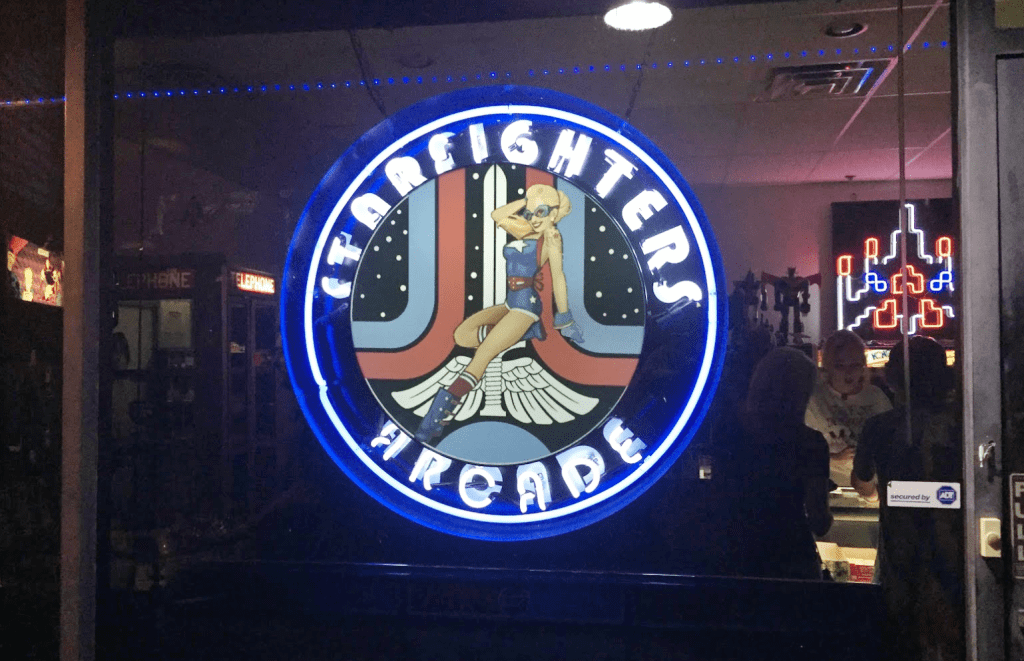
StarFighters Arcade
4840 E. Jasmine St., #102, Mesa
Retro is the name of the game at this throwback geek destination. Inside, you’ll find a mix of classic arcade games and pinball machines, as well as a collection of vintage toys and ’80s flicks being screened. The circular signage at StarFighters is just as nostalgic as the rest of the offerings, as it combines pinup art ringed by a neon rendering of the arcade’s name. Owners Michael Lovato and Steve Thomas commissioned Mesa artist Larry Graham to craft the piece along with neon versions of Pac-Man and the spaceship from “Galaga” decorating the walls of the place.
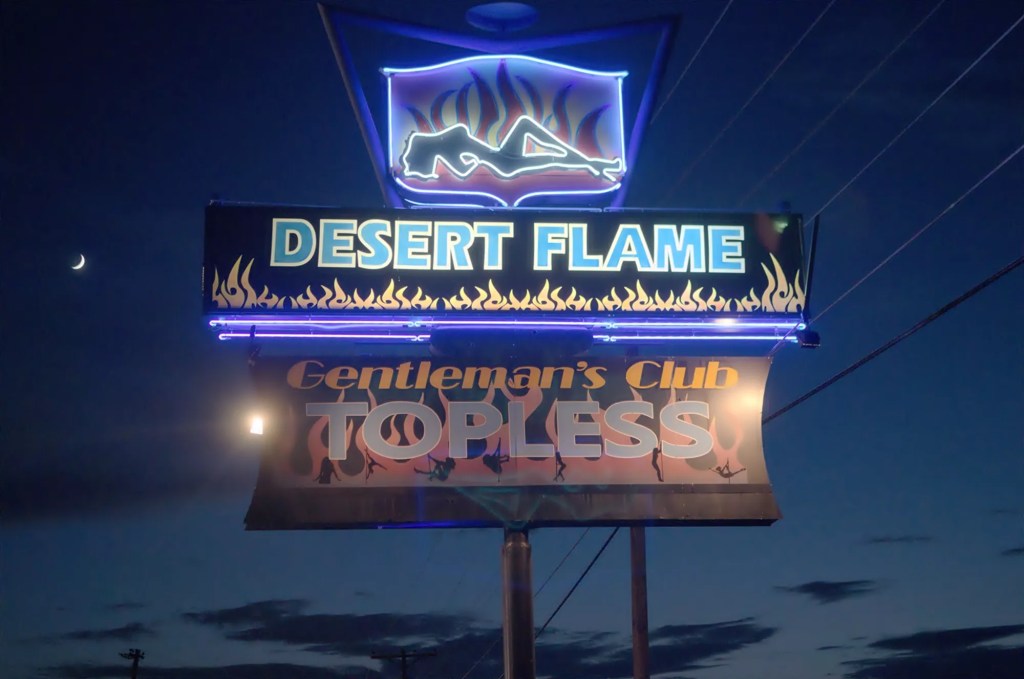
Desert Flame
1145 E. Apache Trail, Mesa
This Mesa topless bar’s towering sign features the silhouetted figure of a curvy female lying in repose, which not only tempts potential clientele but also upholds a longstanding tradition of neon being used at strip joints. “Signs like that go way back to the era where you would have a gentleman’s club that would have a neon sign out front,” Arizona historian Marshall Shore says.
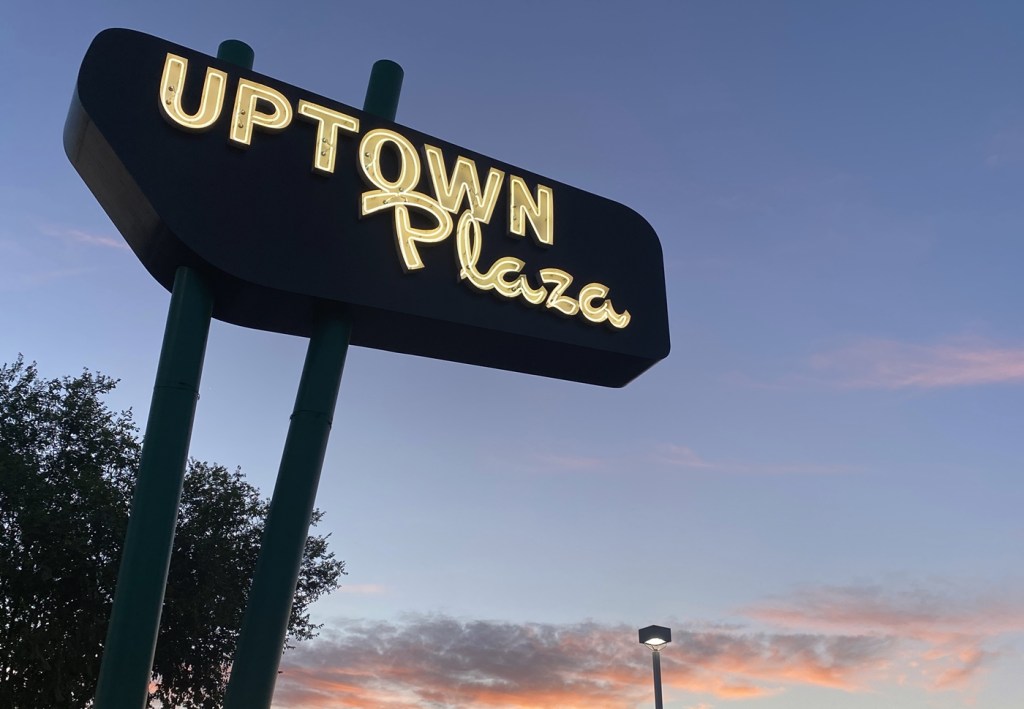
Uptown Plaza
100 E. Camelback Road
The glowing neon signage at Uptown Plaza is a modern recreation of a Phoenix classic. The original signs debuted alongside the shopping center in 1955, when Uptown Plaza became the city’s first grocery-anchored strip mall. Designed by legendary Valley artist Glen Guyette, the signage helped define the plaza’s midcentury modern look. During the property’s 2016 revitalization, local developer Vintage Partners recreated Guyette’s original neon designs using his artwork and blessing.
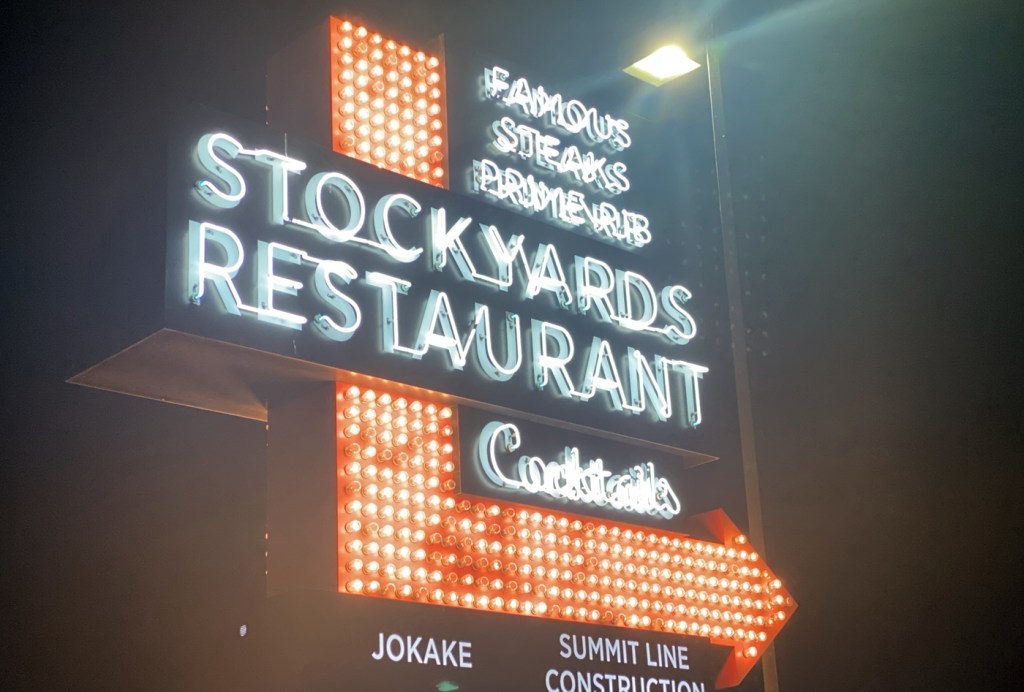
The Stockyards Restaurant
5009 E. Washington St., #115
This towering recreation of the original Stockyards Restaurant sign, which dates back to 1954, lights up Washington Street in all its midcentury glory. Covered in hundreds of glowing bulbs and crowned with crisp white neon lettering, the massive display looks like a leftover relic from Phoenix’s old cattle-town days and classic steakhouse era.
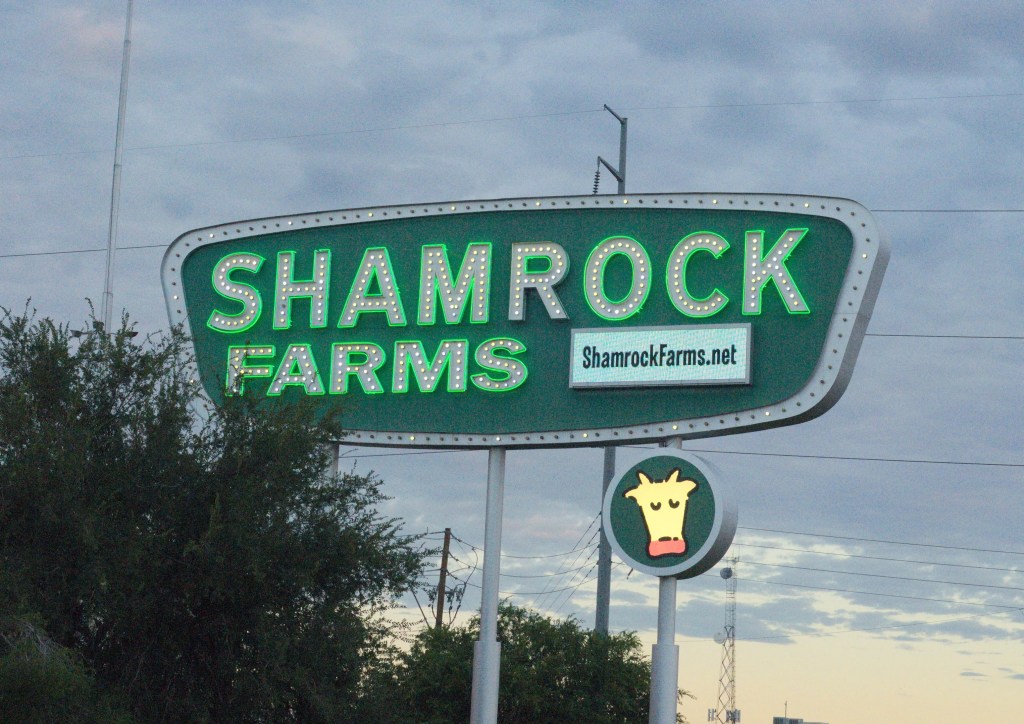
Shamrock Farms Dairy
2228 N. Black Canyon Highway
Valley natives and longtime residents are probably well-acquainted with this Interstate 17 landmark that towers over the Shamrock Farms Dairy along the freeway just north of McDowell Road. The ovoid sign envisioned by famed designer Glen Guyette is ringed with twinkling bulbs and populated with neon lettering. It’s given the time and temperature to passing motorists for several decades now, not to mention shilling the company’s selection of dairy products.
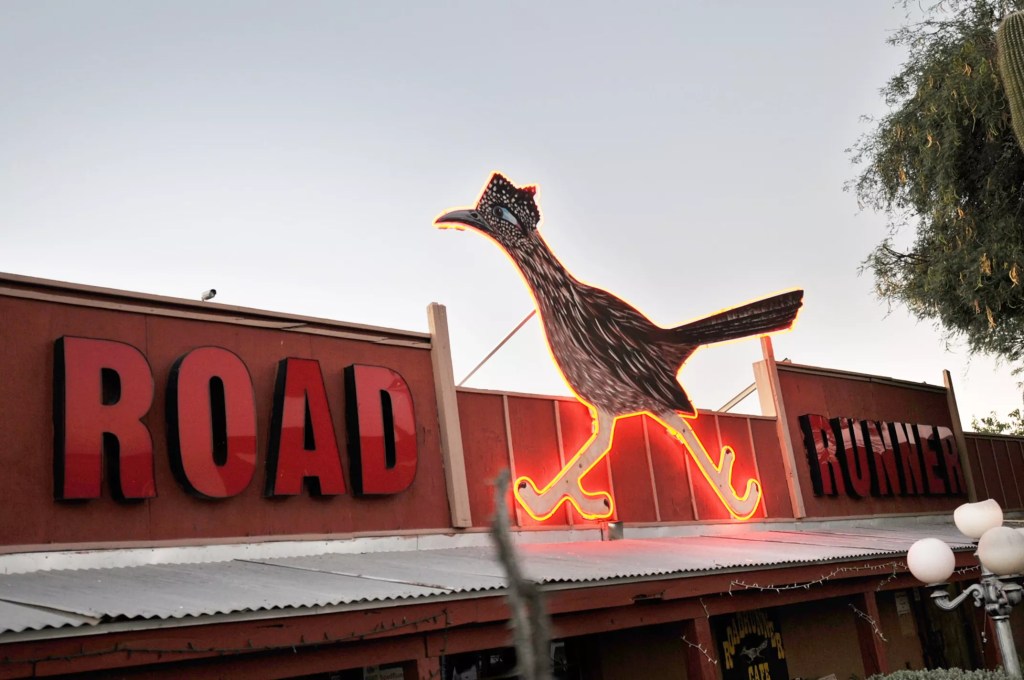
Roadrunner Restaurant & Saloon
47801 N. Black Canyon Highway, New River
Most roadrunners have a tendency to quickly dart out of sight. The one bolted to the roof of this western steakhouse and saloon out in the hinterlands of New River will be easier to spot, probably because it’s both enormous and trimmed in bright red neon. Heck, you might even spy its crimson glow while driving after dark along the northbound Interstate 17 nearby.
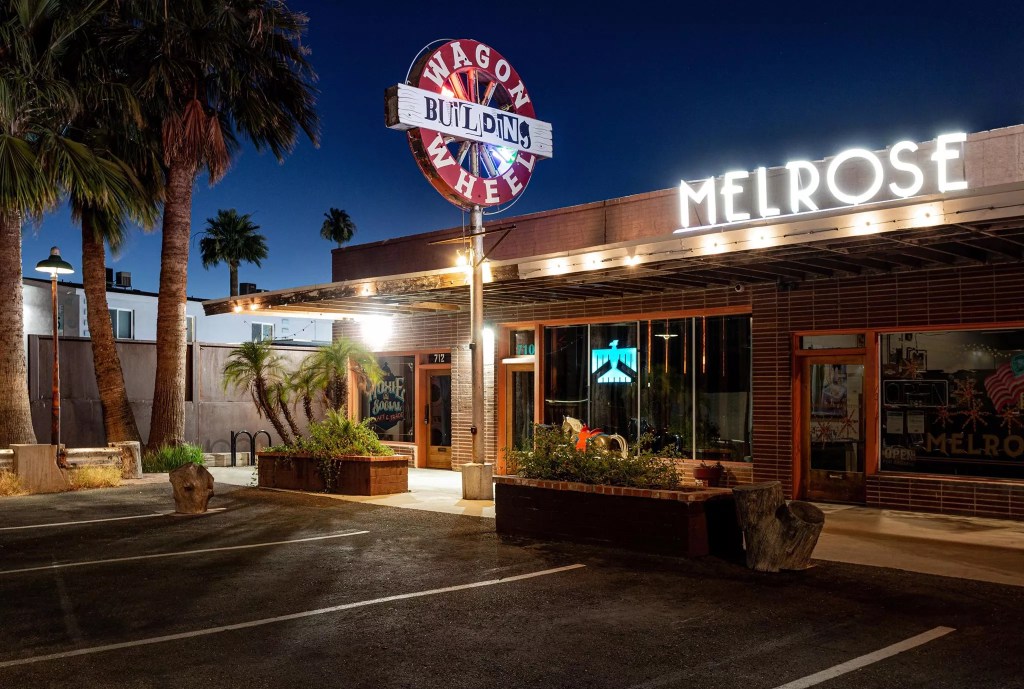
Wagon Wheel Building
706-712 W. Montecito Ave.
The owners of this historic Melrose District shopping plaza dropped a considerable chunk of change in 2005 to refurbish, restore, and rewire its sign, to the tune of around $3,500. It was worth every penny, as it’s’s one of the liveliest signs in the neighborhood due to its constantly spinning pinwheel of individually colored neon spokes.
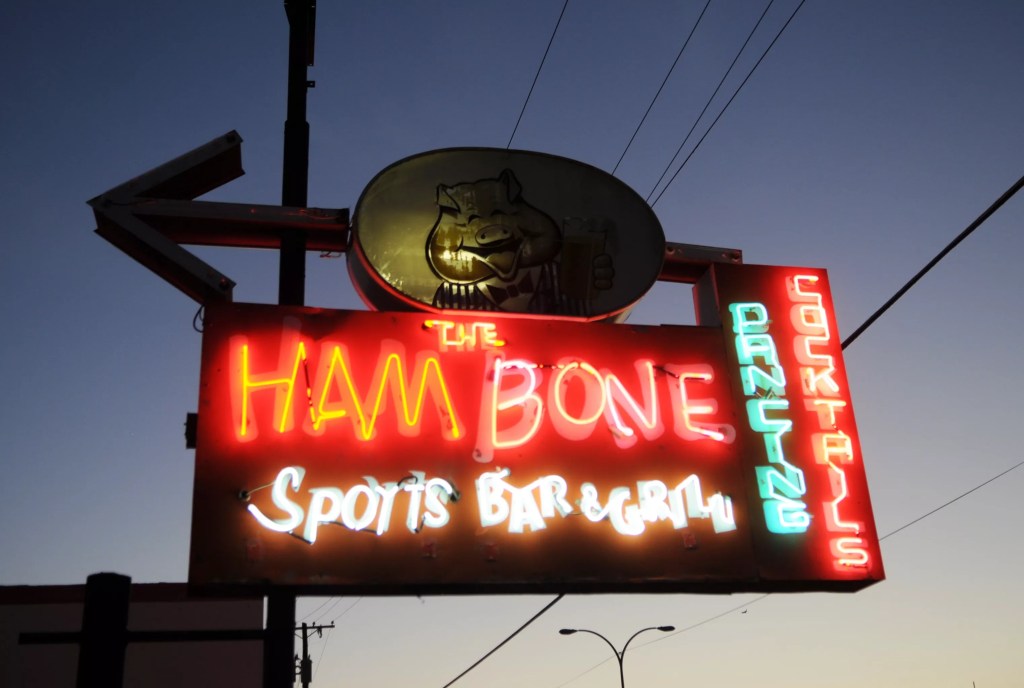
Hambone Sports Bar
903 E. Main St., Mesa
Don’t let its “sports bar” moniker fool you: The Hambone in Mesa is a dive, pure and simple. And it’s been around forever. Booze pigs have been stopping by to take a drink or shoot some stick for generations, as it’s been a mainstay of Main Street for more than 50 years. And the Hambone’s jaunty and colorful neon-lit sign, featuring a dapper porker raising a toast, has been there since the first round was served.
Liquor Wheel
3445 E. McDowell Road
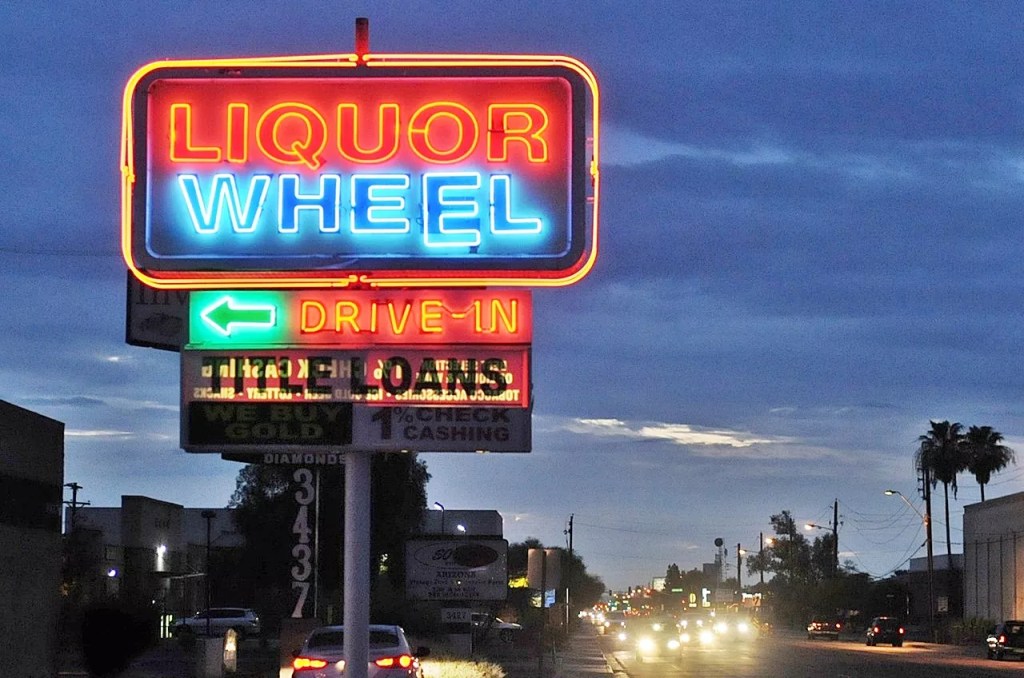
The rise of car culture in the Valley during the midcentury era brought with it an increase in businesses geared toward motorists, including drive-thru establishments like this long-running McDowell Road business. Liquor Wheel’s been around since the ’50s, and has stayed largely unchanged (save for the fact its proprietors now offer auto title loans and buy gold), even sporting the same red and blue neon that trims the roof of its chalet-style structure and forms the glowing letters of its classic sign.
Melrose Pharmacy
706 W. Montecito Ave.
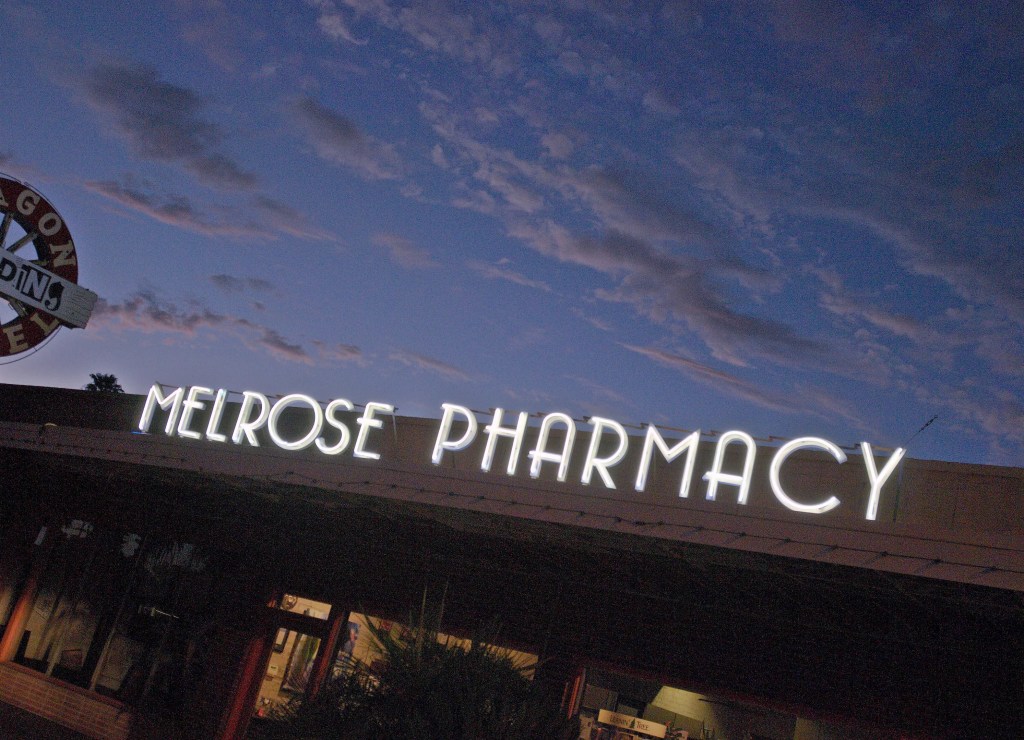
Befitting of its home in the circa-1930s Wagon Wheel Building, the sign at Melrose Pharmacy utilizes Art Deco lettering and is made from repurposed materials. It also offers a vintage vibe. The building’s former owner Kurt Stickler researched plaza and lollipop-style signage from the era when creating it along with local neon artist Sue Meyers. “It’s one of my favorites, and not because I helped make it,” she says. “[Kurt] did everything old school from the fabrication of the letters to the color of the neon. It’s great.”
Roadrunner Motel
2066 W. Main St., Mesa
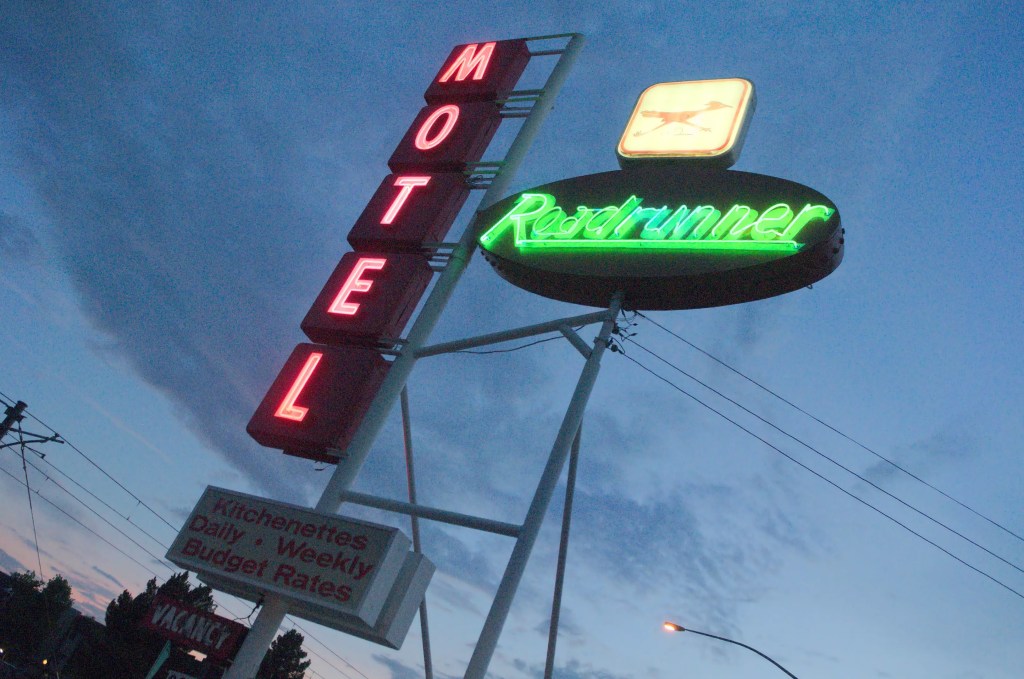
It’s been a long, hard road for this old bird. During its heyday more than 50 years ago, the Roadrunner was one of a host of squeaky clean local motor hotels steeped in the sort of Southwestern kitsch that tourists ate up with a spoon. These days, its swimming pool is now a cement slab surrounded by scattered weeds and there’s a comfortably shabby vibe to the whole place. Its charming sign, however, still looks great after all these years (even if the plastic roadrunner placard is a little faded), particularly under the cover of darkness when it’s all lit up.
Don Woods’ Say When
400 W. Camelback Road, Building F
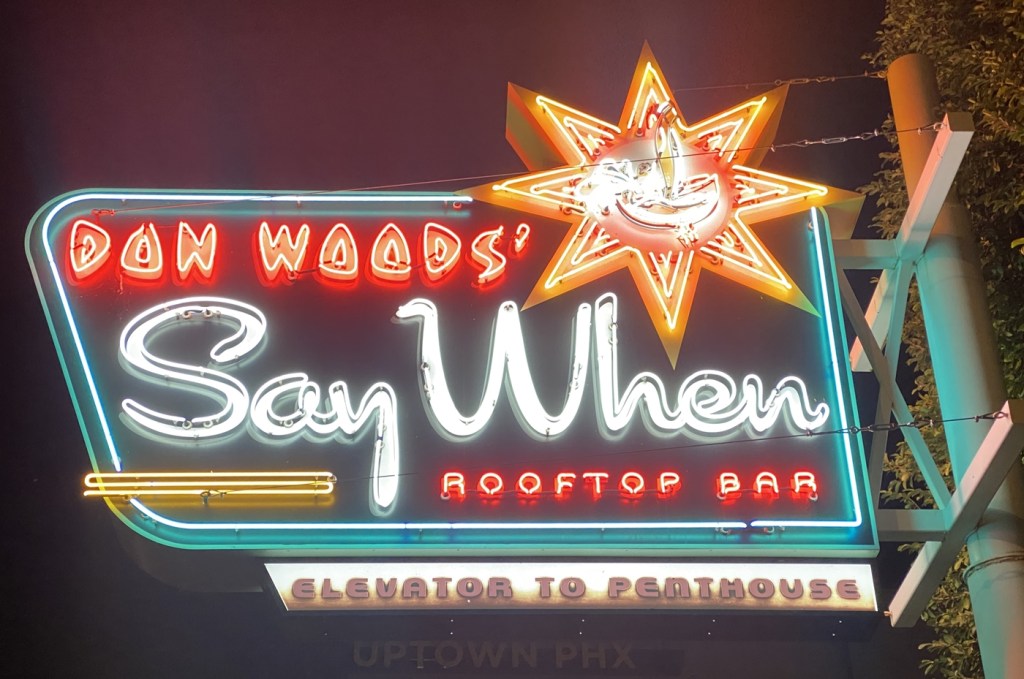
Given how Don Woods’ Say When is pure ’60s style and mid-century nostalgia, having a giant neon sign out front tracks. The glowing retro-inspired display outside the rooftop cocktail bar at the Rise Uptown Hotel looks like it was plucked straight from the “Mad Men” era, complete with a starburst, cursive lettering and an old-school “Elevator to Penthouse” marquee glowing beneath it.
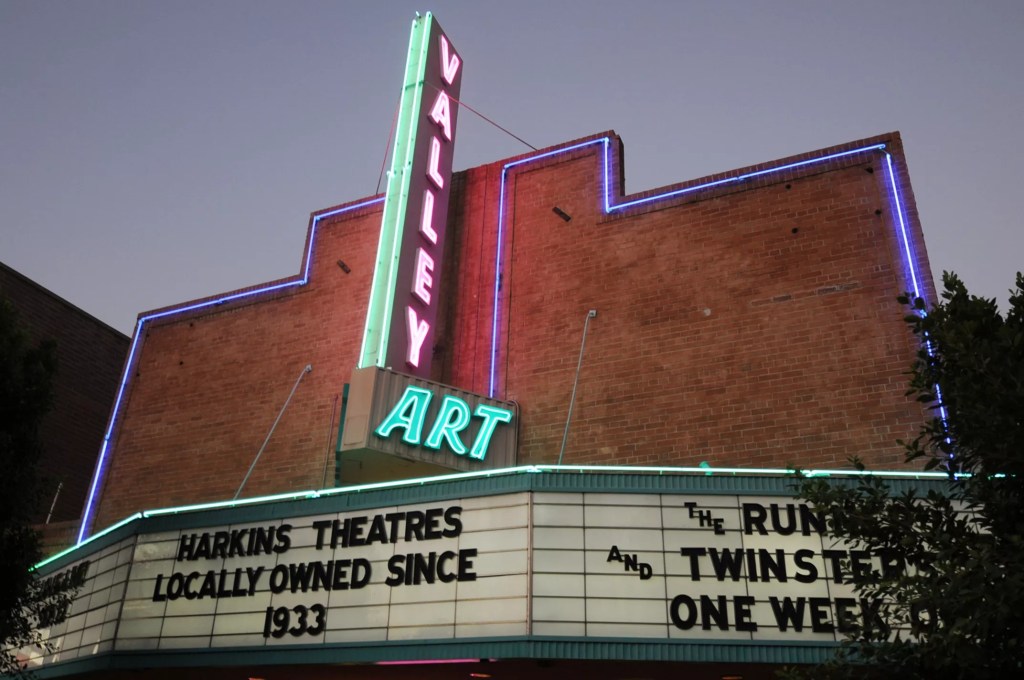
Harkins Valley Art
509 S. Mill Ave., Tempe
Local cinephiles have spent years hoping the Valley Art will eventually reopen following the closure of the historic Mill Avenue movie house in 2020 during the pandemic. Even in its dormant state, though, the theater’s massive neon sign still glows above downtown Tempe like a relic from another era. For many longtime movie lovers, the illuminated marquee remains a reminder of the days when the Valley Art welcomed patrons for screenings of indie films, foreign fare and cult flicks on the regular.
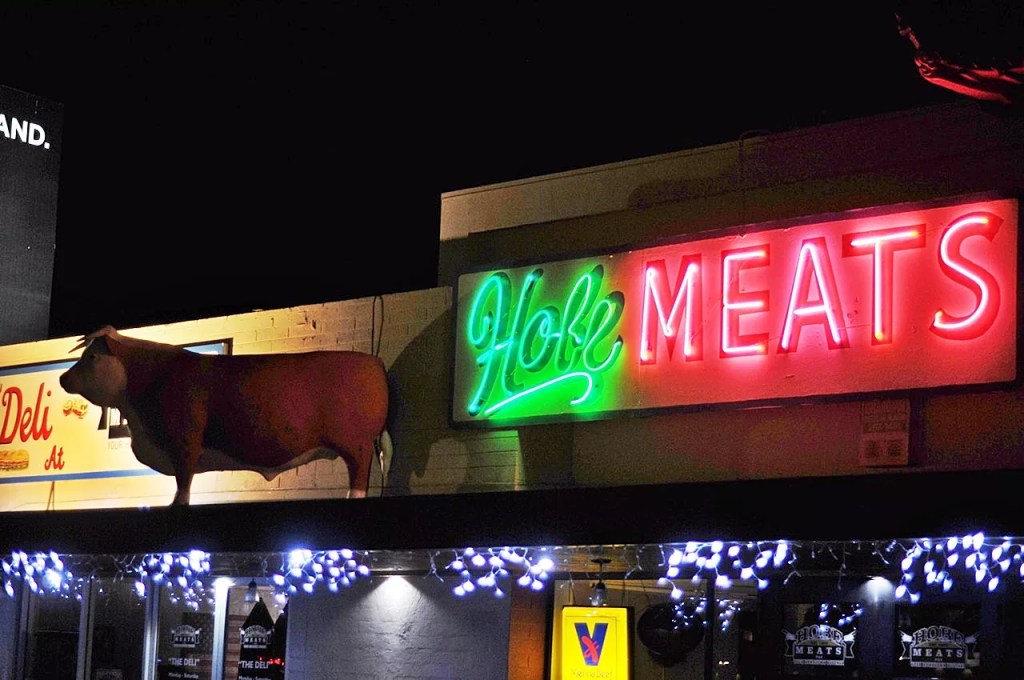
Hobe Meats
6044 N. 16th St.
After local butcher Bret Pont bought Hobe Meats from its founders in 2009, he kept things pretty much the same at the long-running Phoenix shop. That includes its neon sign, which Pont says dates back to the establishment’s opening in 1962 and still features its original glass tubing. A pair of enormous plaster statues of steers, which Pont purchased from the now-defunct Pinnacle Peak Patio in Scottsdale, alongside the sign, helps it stand out even more.
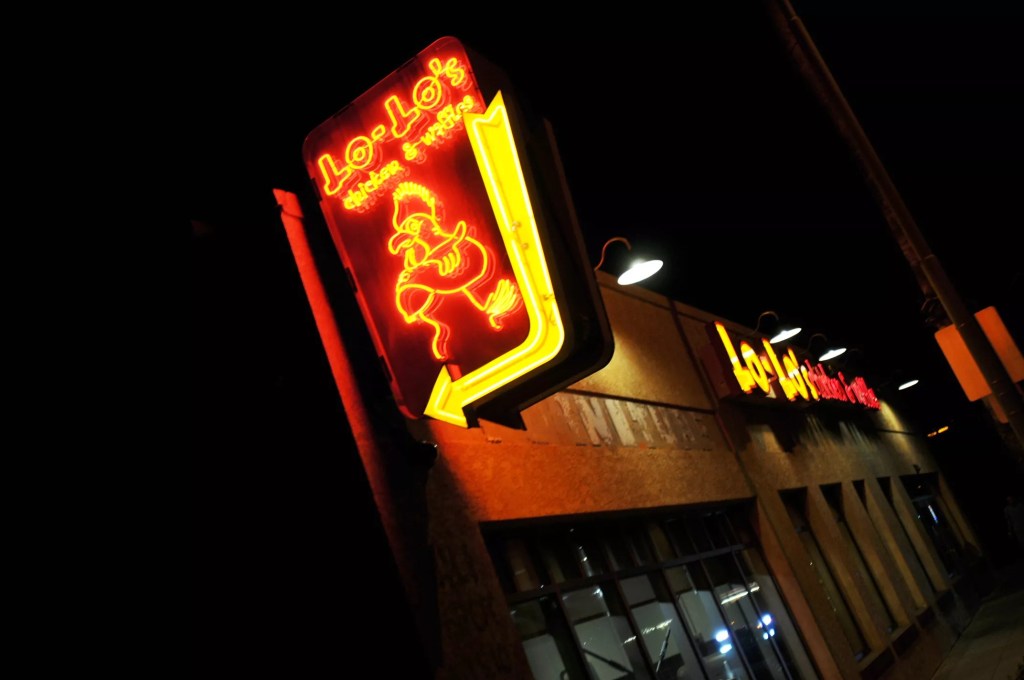
Lo-Lo’s Chicken & Waffles
1220 S. Central Ave.
The chicken is definitely badass at Lo-Lo’s location on Central Avenue — and we aren’t necessarily referring to the deliciously deep-fried yardbird being served inside. There’s also the restaurant’s icon of a muscled-up rooster rendered in red and yellow neon that’s part of its signage outside.
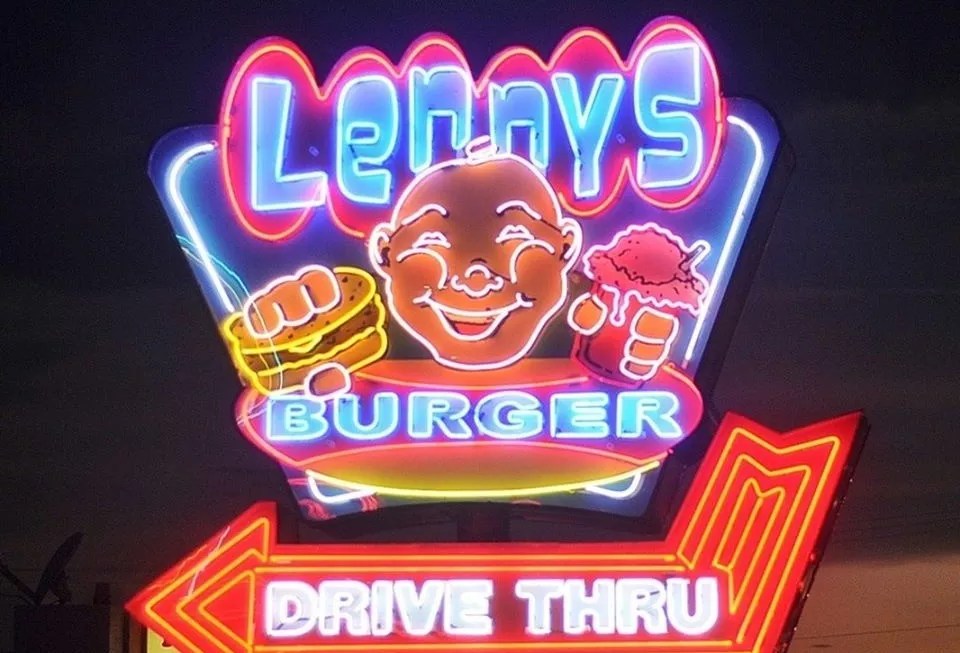
Lenny’s Burger Facebook
Lenny’s Burger
2545 W. Glendale Ave.
Neon and fast food restaurants have always gone together like burgers and fries. Both experienced a significant boom period in the ’50s and were intertwined for decades. In fact, the first-ever McDonald’s franchise was built near the intersection of Central Avenue and Indian School Road in 1953 and was wrapped in glowing neon, including its signature golden arches. So when the owners of the homegrown Lenny’s chain remodeled their Glendale Avenue location several years ago, it seemed fitting they spruced up its amusing sign and exterior with an array of glowing, gas-powered lighting.
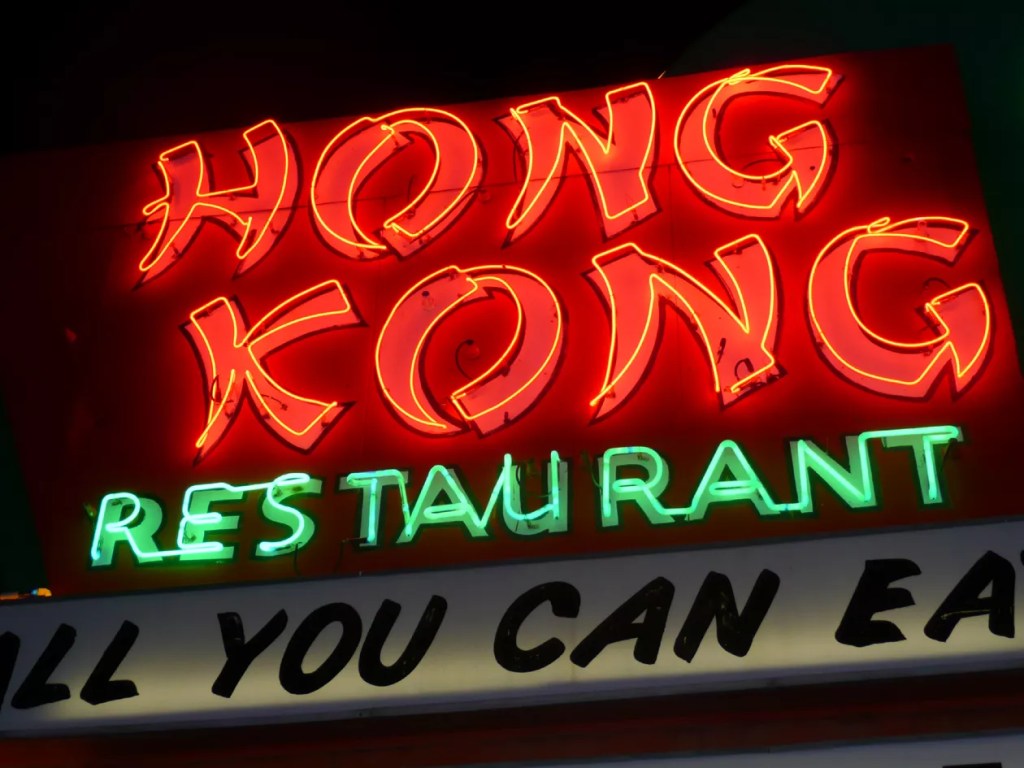
New Hong Kong Restaurant
2328 E. Indian School Road
The sign outside this Arcadia-area Chinese restaurant is quaintly vintage. Its curious shape tends to attract the eye, as does the fact that certain neon letters always seem to be on the fritz, humorously resulting in the name of the place being rendered as “Ho Ko.” Part of us hopes the owners never fix it, allowing us a personal chuckle every time we drive past.
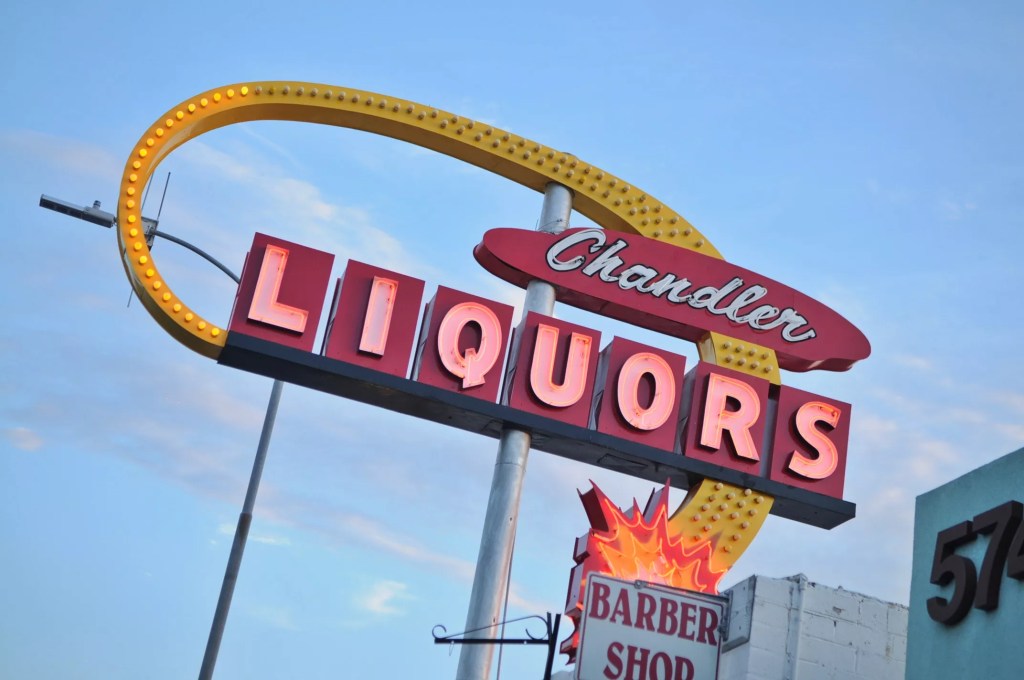
Chandler Liquors
554 N. Arizona Ave., Chandler
Drivers cruising past Chandler Liquors might find it a little difficult to keep their eyes on the road, considering this attention-grabbing distraction up on the store’s rooftop that dates back to the early ’60s. Boasting a cascading array of incandescent lights that swoop up, over, and around into a neon explosion, it’s definitely one of the more unique signs in the Valley.
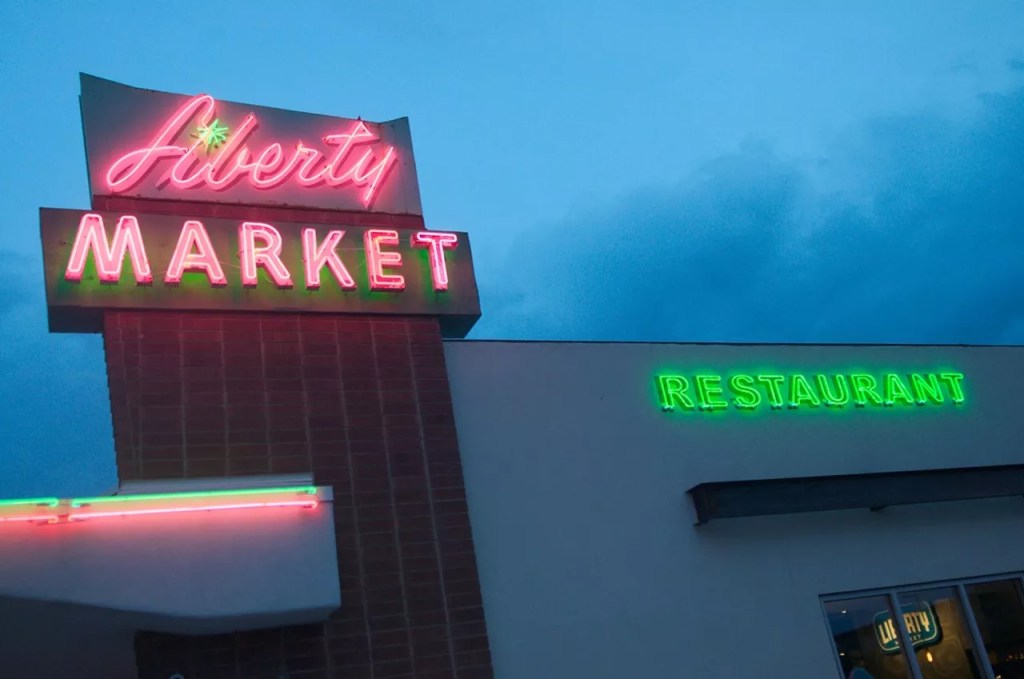
Liberty Market
230 N. Gilbert Road, Gilbert
Downtown Gilbert’s Heritage District has become a hot spot for neon signage over the last few years. Long before restaurants like Oregano’s or Zinburger embraced the art form, the landmark Liberty Market was bathed with pink and green light from the gas-filled glass tubes adorning its building and picturesque marquee. Designed in 1958 by the late Mae Ong, who owned the business with her husband, the neon has survived the decades and the property’s transformation into an eatery by restaurateur Joe Johnston in the late 2000s. It’s a gorgeous reminder of the Gilbert of yesteryear.
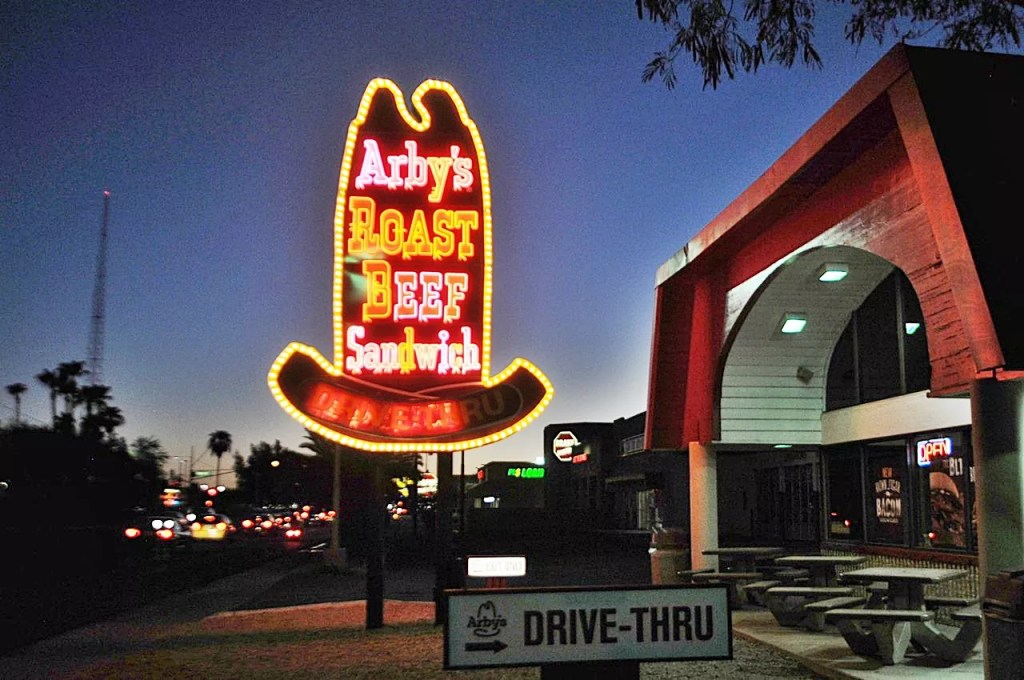
Arby’s
3826 E. Thomas Road
You don’t have to be a fan of Arby’s (or even fast food in general) to appreciate the throwback flair of the enormous sign outside of its location on Thomas Road near 38th Street. Like the restaurant itself, the glowing hat-shaped monolith has been around for going on five decades and is the only one of its kind in Arizona. It’s undergone a few cosmetic tweaks over the years, including adding the phrase “Drive-Thru” along the brim of the hat, but has remained largely unchanged since its debut in the late 1960s.
The Neon Garden
26 N. Macdonald, Mesa
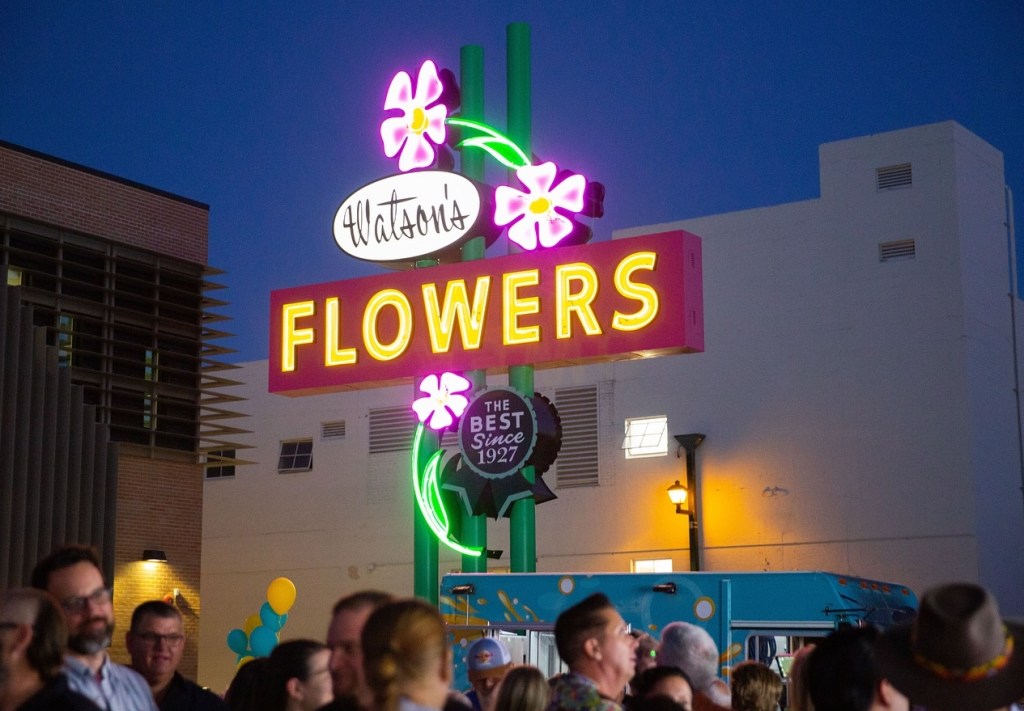
Some of Phoenix’s most iconic glowing signs have found a second life at Neon Garden. Tucked beside historic community space The Post in downtown Mesa, the free outdoor attraction features restored signage from Bill Johnson’s Big Apple, Watson’s Flowers and Berge Ford alongside a quarter-scale recreation of Mesa’s famed “Diving Lady” sign from the still-standing Starlite Motel.
Cheese ‘n Stuff
5042 N. Central Ave.
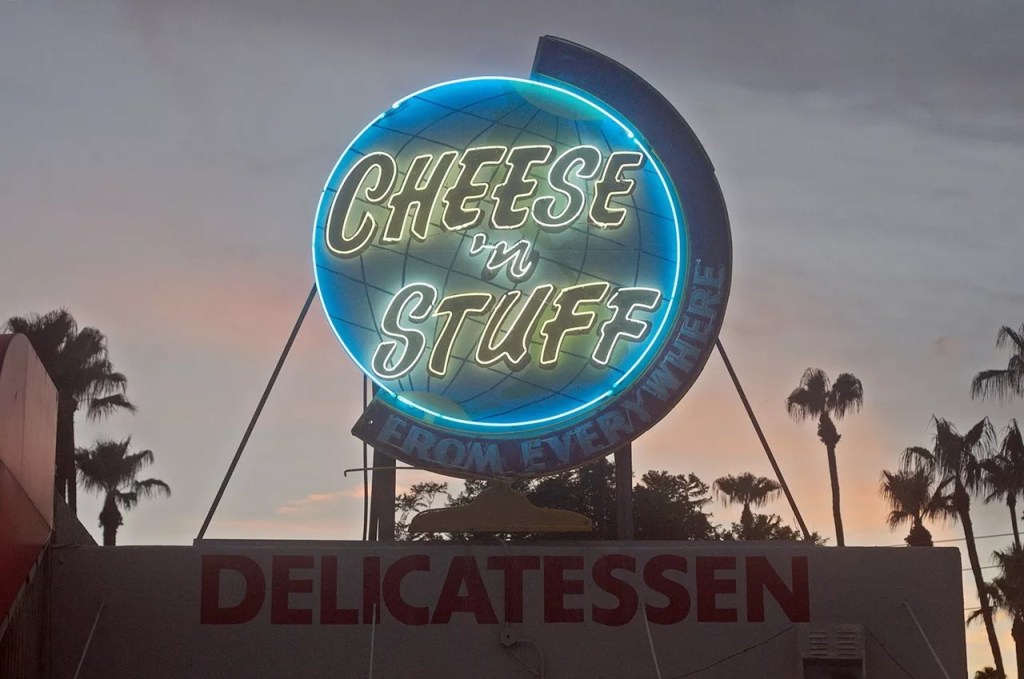
This historic Central Avenue delicatessen, which first opened in 1949, is topped by an equally vintage globe-shaped sign. Created by renowned local sign-maker Leonard Christensen, the sign was later refurbished in 2014 by his son, Dane Christensen, reportedly free of charge. The decades-old neon display still glows nightly above the beloved sandwich shop after longtime owner Stan Zawatski retired and sold Cheese N Stuff in 2025.
Trava-Leers Motel
836 W. Main St., Mesa
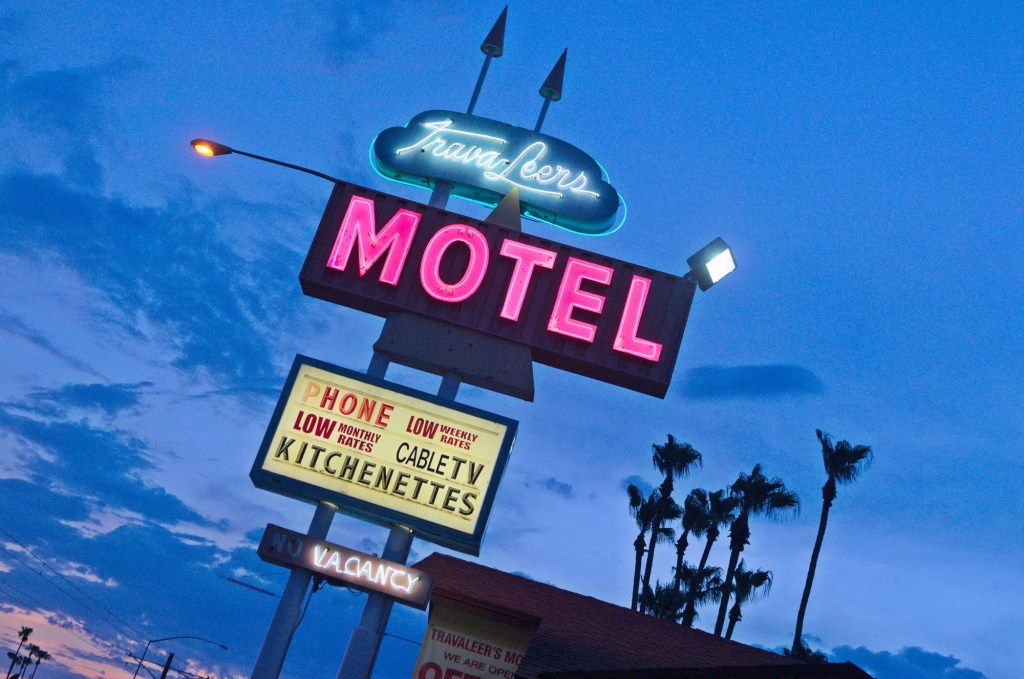
Adorned with cursive-like neon and topped by a trio of Space Age-style cones, the signage for this historic mid-century motel along Main Street in Mesa features style and charm to spare. “It’s adorable,” says local midcentury guru Alison King. “There’s something about that white script that’s so charming and very sweet. It makes it look very friendly and inviting to visitors. It’s just this invitation to come by and check it out.”
Joe’s Real BBQ
301 N. Gilbert Road, Gilbert
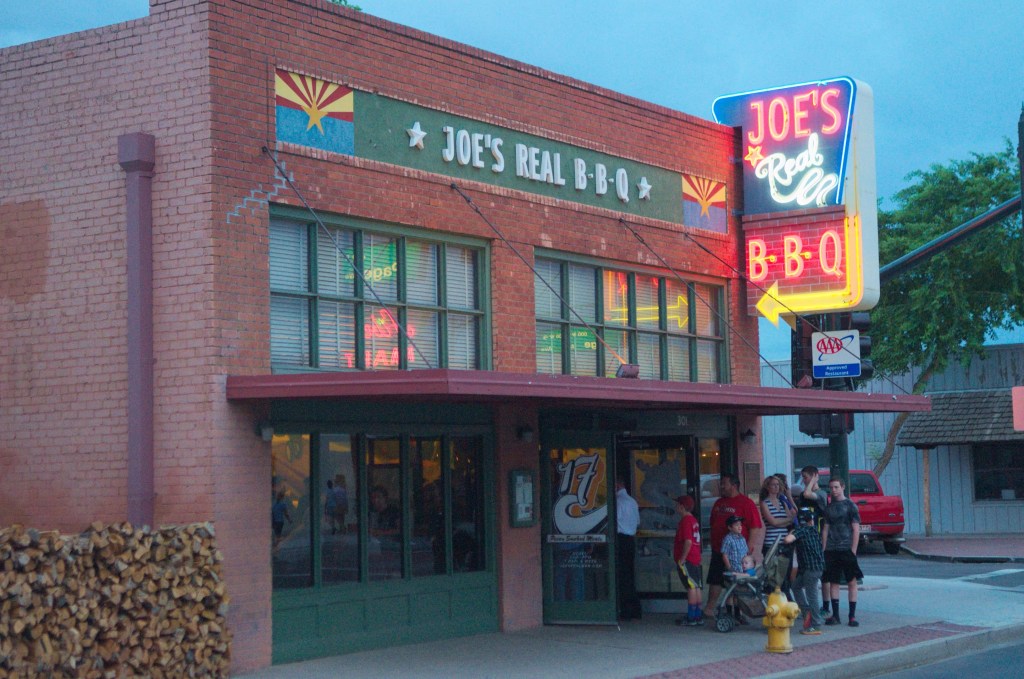
Restaurateur Joe Johnston’s popular barbecue spot in Gilbert is not only big on sumptuous and smoked meats, it’s also big on history. Inspired by Texas ‘cue joints from the 1940s, it’s housed in a former Depression-era market, sports an interior mural celebrating the town’s agrarian heritage, and is laden with antiques and ephemera. Another nod to the past can be seen in the lively and spirited neon sign hanging from the second floor that looks like it fell out of a time warp. A waft of smoke playfully forms part of the lettering while an animated golden arrow invites hungry diners inside to sit for a spell and dig into a plate of pulled pork or a mess of ribs.
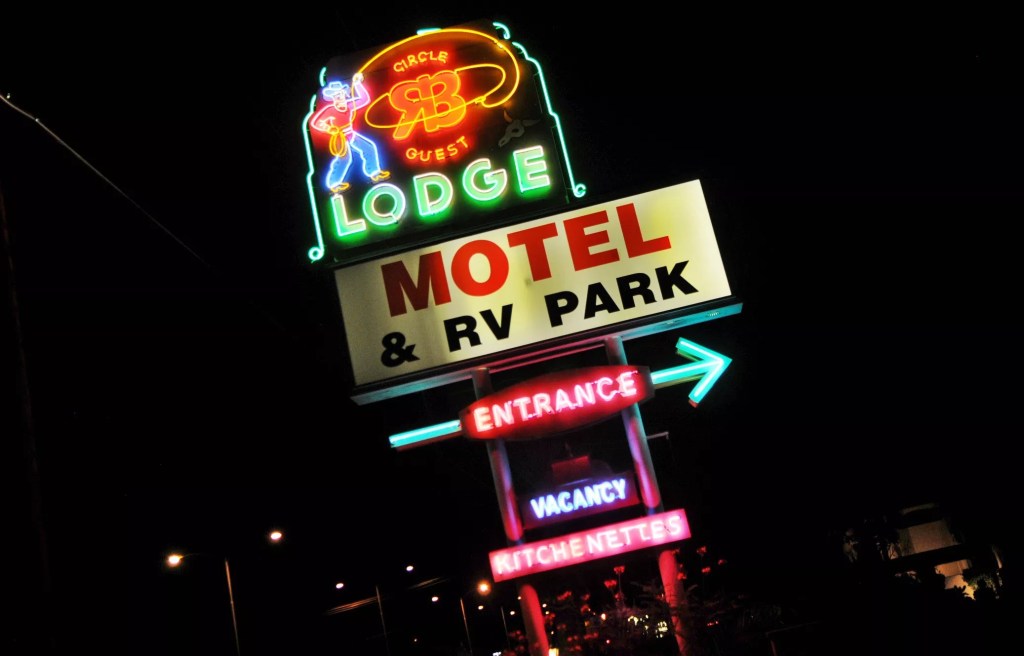
Circle RB Lodge
6547 E. Main St., Mesa
Many a midcentury motor lodge along Main Street in Mesa or the Apache Trail plays off Arizona’s Wild West past, including this ranch-style roadside stop from the Eisenhower era that features Spanish casitas and an illuminated buckaroo that helped bring in weary travelers. According to local historian Douglas Towne in a piece he wrote for the Society for Commercial Archaeology, “wranglers were common inanimate barkers used to entice tourists. One of the most talented is the neon cowboy at the Circle RB in Mesa whose giant lasso forms the sign’s boundaries.”
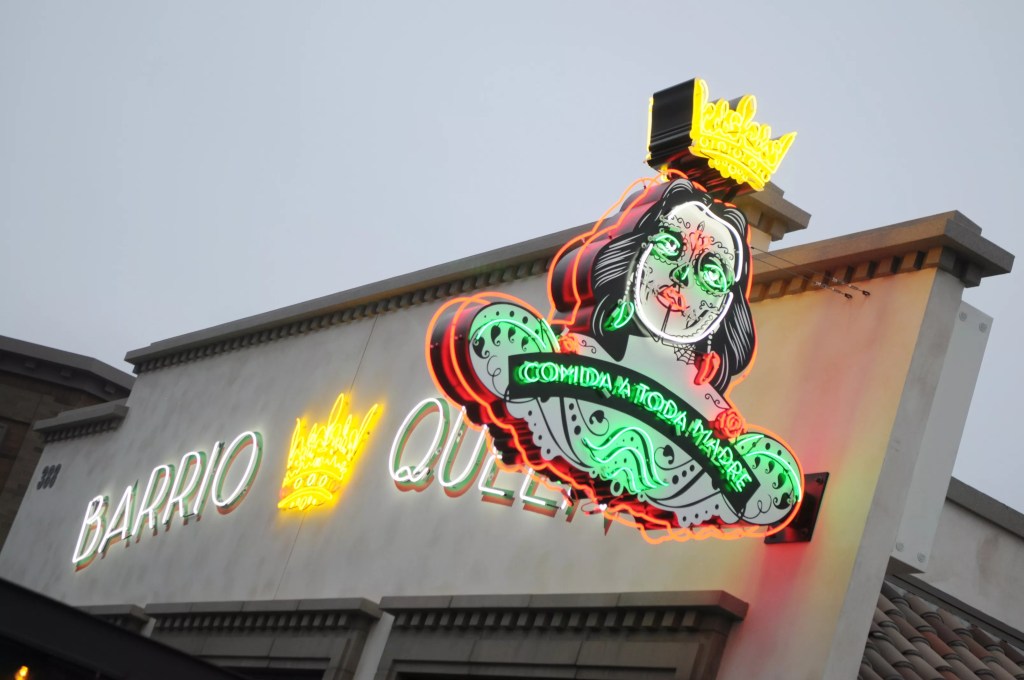
Barrio Queen
388 N. Gilbert Road, Gilbert
Both the Scottsdale and Gilbert versions of high-style Mexican restaurant Barrio Queen feature a Day of the Dead-inspired logo of a regal-looking katrina. The latter spot, however, utilizes it in far more flashy fashion as it’s been transformed into a magnificent animated neon sign created by Valley design firm Trademark Visuals and reigns over the town’s Heritage District, at least in terms of its pizzazz.
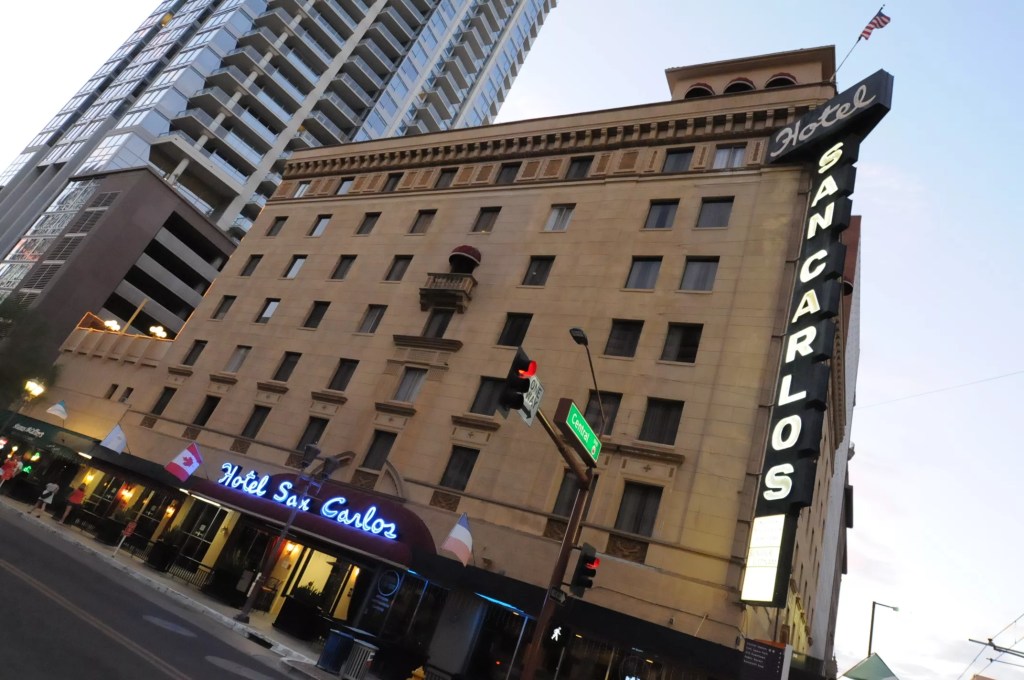
Hotel San Carlos
202 N. Central Ave.
Over its 92-year lifespan, this famed downtown Phoenix hotel has undergone myriad modifications and upgrades to keep up with the times, like the extensive renovation to its exterior in the mid-1950s. Downtown had gone gaga for neon around then, and the Hotel San Carlos followed suit by transforming the blade sign ran that crawled up the side of the six-story building into an electrified marquee spelling out the hotel’s name in illuminated block lettering. Its canopy awning was also replaced with a metal overhang and another neon sign. Both exist to this day and have become trademarks of the hotel.
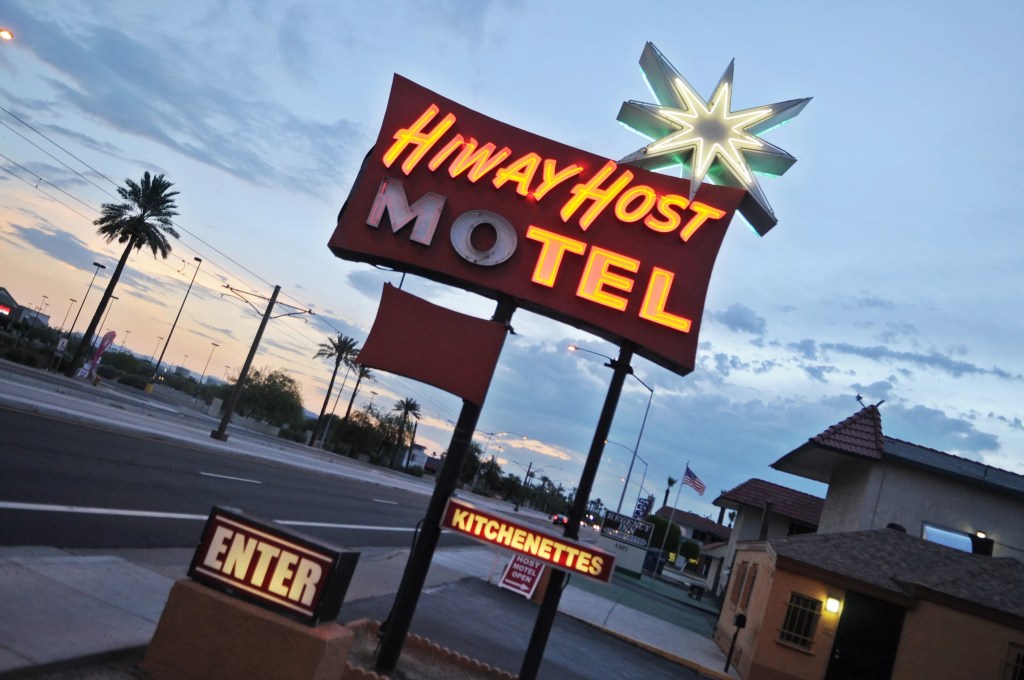
Hiway Host Motel
1260 W. Main St., Mesa
The staff at the Hiway Host in Mesa aren’t exactly certain of when the Main Street motor lodge opened its doors to weary travelers. Its distinctive and quaint sign, however, is clearly steeped in mid-century kitsch of the 1950s, from its playful lettering to the starburst on top. It’s worth checking out when cruising along Main Street, even if all the neon isn’t working at that particular moment.
New Windsor Hotel
546 W. Adams St.
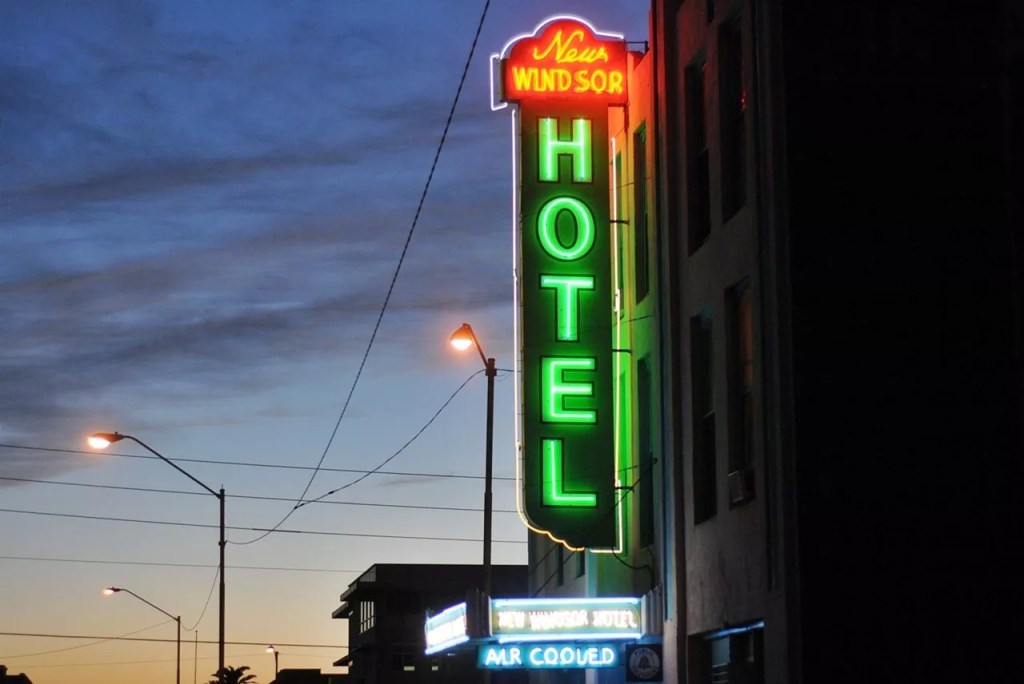
There’s a lot to love about the New Windsor. For starters, this grand old dame is more than 125 years old and is one of only a handful of Victorian-era buildings left in Phoenix, which makes it both historically and architecturally significant. Tucked away in one of the sleepier portions of downtown Phoenix, it stands out from a rash of boring and blighted buildings, largely due to its pink and teal paint job and all the jazzy neon just above the front door. The blade-style sign was installed during a 1935 renovation that also added a third floor to the property, which now serves as low-cost housing for senior citizens.
Sunland Motel
2602 E. Main St., Mesa
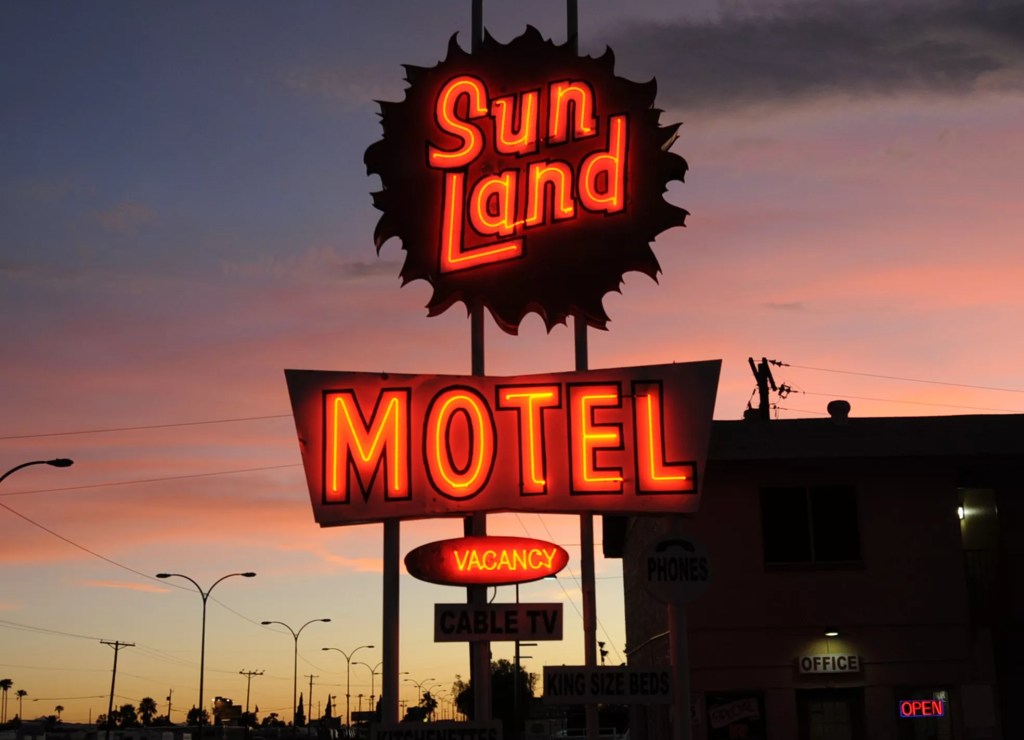
Despite our oftentimes contentious relationship with the sun, the blazing celestial object and the overabundance of light and heat it casts our way ultimately define the Valley. And it’s brought countless millions to these parts over the decades, starting around the time that the original owners of the Sunland first flipped on their signature neon sign in the ’50s.
“Visitors to Arizona often made the journey because of the mild climate making the sun a powerful image used to symbolize the state,” Towne says. Hence this motel’s theme, which juxtaposes nicely with nearby Starlite Motel, home of the famed Diving Lady. “The fiery orange-red neon lighting [of] the Sunland Motel sign in Mesa was in stark contrast to its legendary neighbor, which features an oasis theme,” Towne says.
Jerry’s Drive-In Liquors
1217 S. Rural Road, Tempe
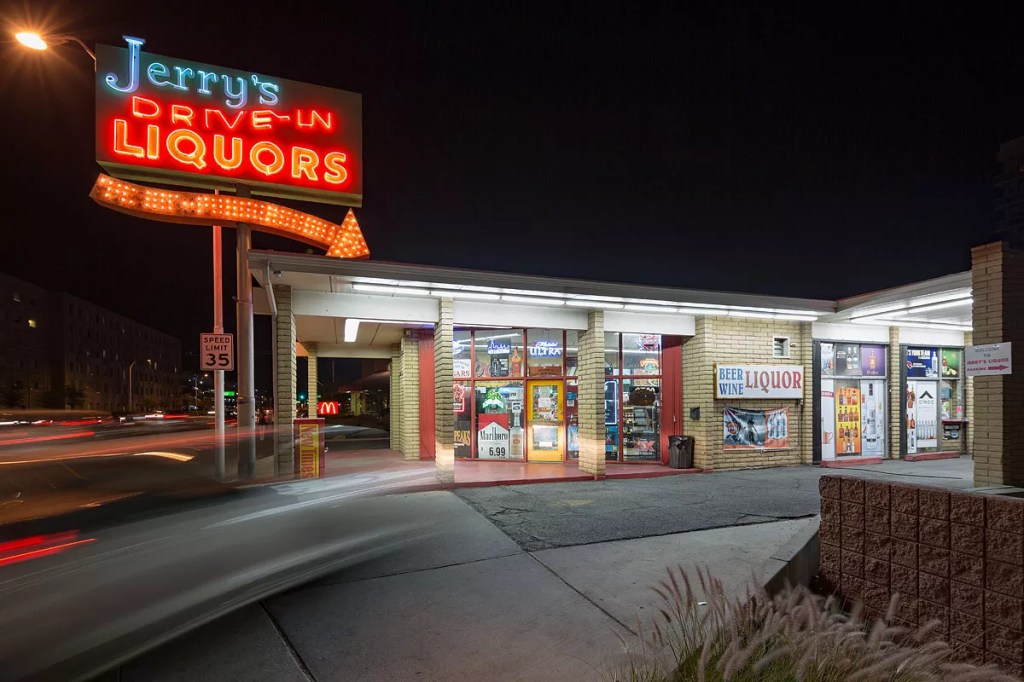
As you’re probably aware, college kids have a thing for drinking. Hence the scores of liquor stores around Arizona State University’s Tempe campus that Sun Devils have flocked to for ages. And from the 1950s onward, students of legal drinking age have been pointed in the direction of Jerry’s thanks to the large arrow equipped with twinkling lights on its neon sign. Local historian Marshall Shore is a fan. “That’s an amazing sign,” Shore says. “The fact it’s very original and that it dates back to that era of, ‘Hey, here’s a big arrow that shows you that Jerry’s Liquor is right this way.’”
Starlite Motel (a.k.a. the “Diving Lady”)
2710 E. Main St., Mesa
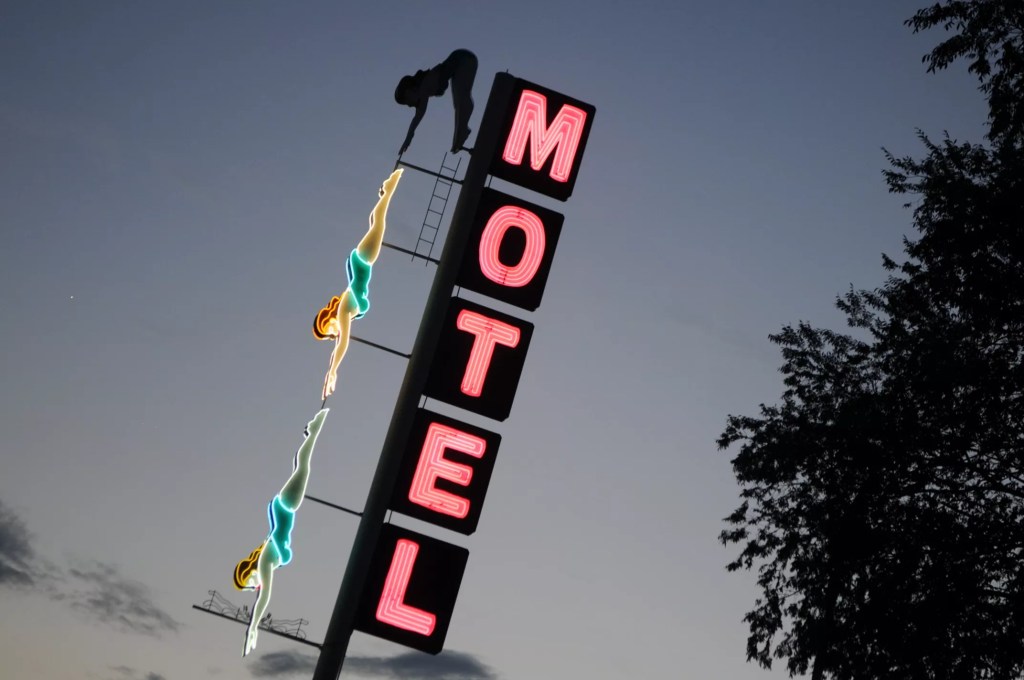
Fans of neon culture and the local historic preservationist crowd applauded in 2013 when this towering animated neon sign, which depicts a bathing beauty taking a high-dive plunge into a pool, located at the Starlite Motel in Mesa, was restored after being toppled by a thunderstorm three years earlier. Widely considered to be the most famous neon sign in the Valley, the “Diving Lady” debuted in 1960 and has become both a local landmark and cultural touchstone for longtime residents, as well as a beautiful remnant of a bygone era.
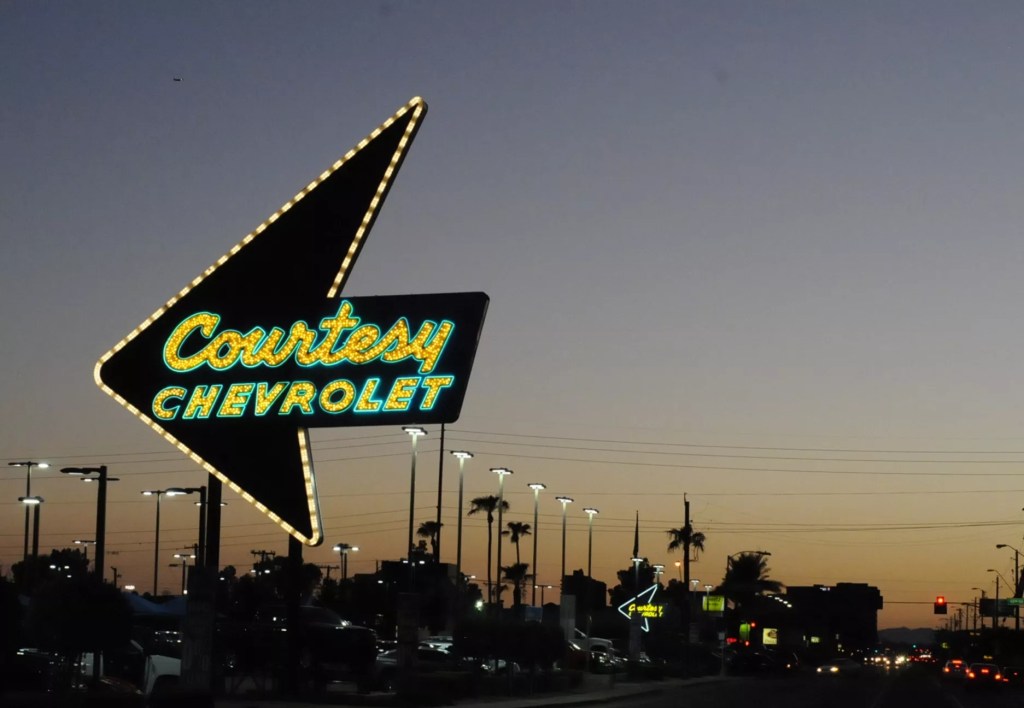
Courtesy Chevrolet
1233 E. Camelback Road
The Camelback Corridor wouldn’t look the same without the ever-present sparkle, glitter and glow provided by the iconic and historic sign at Courtesy Chevrolet being a part of the street’s skyline. Built in 1957 when the auto dealership moved to its present location, it has a significant mid-century modern flair with its arrow-shaped design, an emphasis on twinkling lights, and rounded edges, making it very much a product of its era. A flashy tableau of hundreds of shimmering and winking lights are contained within the letters, each of which is outlined in cerulean neon.
According to the staff at the dealership, the sign has undergone some changes in recent years, such as replacing its mechanical flashers and incandescent bulbs with LEDs, in order to make it more energy-conscious. The dealership staff also conducts routine inspections and maintenance on the sign, both to keep things operating properly and to ensure the towering sign is structurally sound. Good thing, too, since monsoon thunderstorms have dealt a few tragic blows to many historic signs around the Valley over the years.
Editor’s note: This article was previously published in 2015 and 2020 and has been updated with additional signs.
Source link
Benjamin Leatherman The best, most iconic neon signs in Phoenix www.phoenixnewtimes.com
Phoenix New Times 2026-05-08 17:15:43
Arts & Culture +



GIPHY App Key not set. Please check settings