 By Jimmy Magahern, Inside Tucson Business Contributor

Faced with rising temperatures, prolonged drought and escalating building material costs, a lot of Tucsonans are rethinking what actual “home improvement” means in this region. And increasingly, we’re turning to Tucson’s own environmental DNA for inspiration — tapping into regional traditions, climate-responsive design and low-impact building methods that have long made desert living sustainable.

Brad Lancaster, author of “Rainwater Harvesting for Drylands and Beyond,” said the best solutions — planting shade trees on the east and west sides of the home, digging basin-like shapes in the yard to hold rainwater and reusing gray water from washing machines to irrigate landscaping — are often the oldest.
“None of the stuff is new,” he said. “It’s all ancient practices — but ones that we forgot. I’m just bringing it back into the modern context.”
Lancaster’s own home, a once-condemned adobe near downtown Tucson, now serves as a showcase for hyperlocal water harvesting.
“The better we insulate and reduce the demand on the air conditioner, the more comfortable it can be in the home,” says Andrew Hayes, whose family business has built and remodeled green homes in Tucson for decades.
“Just the easiest way to start is some simple shovel work in the yard to make these basin-like shapes and then to plant the right kind of trees in the appropriate locations,” he said. “And then gravity will just move the rainwater there.”
He’s equally practical about indoor-outdoor integration. “If a remodeler is doing any plumbing, like maybe putting in a new shower or something, that’s the ideal time to use a three-way diverter valve to direct your shower, washing machine or sink drain water to the landscape as opposed to the sewer,” he said, adding that the City of Tucson supports diverter valves hooked up to laundry or bathroom lines for landscape use.
Lancaster also said the city offers programs and incentives that can help people incorporate these ideas into remodels.
“You can get up to a $2,000 rebate for harvesting rainwater, and up to a $1,000 rebate for gray water harvesting through Tucson Water,” he said. “Both rebates require you to take a free three-hour course, which is great because they educate folks a little and ensure they won’t be taken advantage of by contractors that don’t really know what they’re talking about. And it’s a free course, so even better.”
That theme — that smarter, greener solutions often come from older methods and materials — resonates with Demion Clinco, CEO of the Tucson Historic Preservation Foundation.
“Materials today are not produced with the same quality that they were in historic periods of development in Tucson,” said Clinco. “Wood has been replaced with composite. Stone has been replaced with laminate. Craft tile has been replaced with mass manufacturer products that are often imported.”

At Brad Lancaster’s house, roof runoff water is directed to dragon fruiting cactus and graywater from sink is directed to plants via black branched-drain pipe
Rather than sourcing new materials to mimic the old, Clinco urged homeowners to retain what they already have. “We really recommend that people really assess the quality of the materials. Finding ways to retain those materials keeps those items from going to the landfill.”
If what you have is already too far gone, Tucson’s architectural salvage scene is a great place to find those “they don’t make ’em like that anymore” materials. Stores like the HabiStore and ReStore often carry reclaimed doors, cabinets, fixtures and tiles — helping preserve the character of a home while keeping valuable materials in circulation. It’s also money-smart.
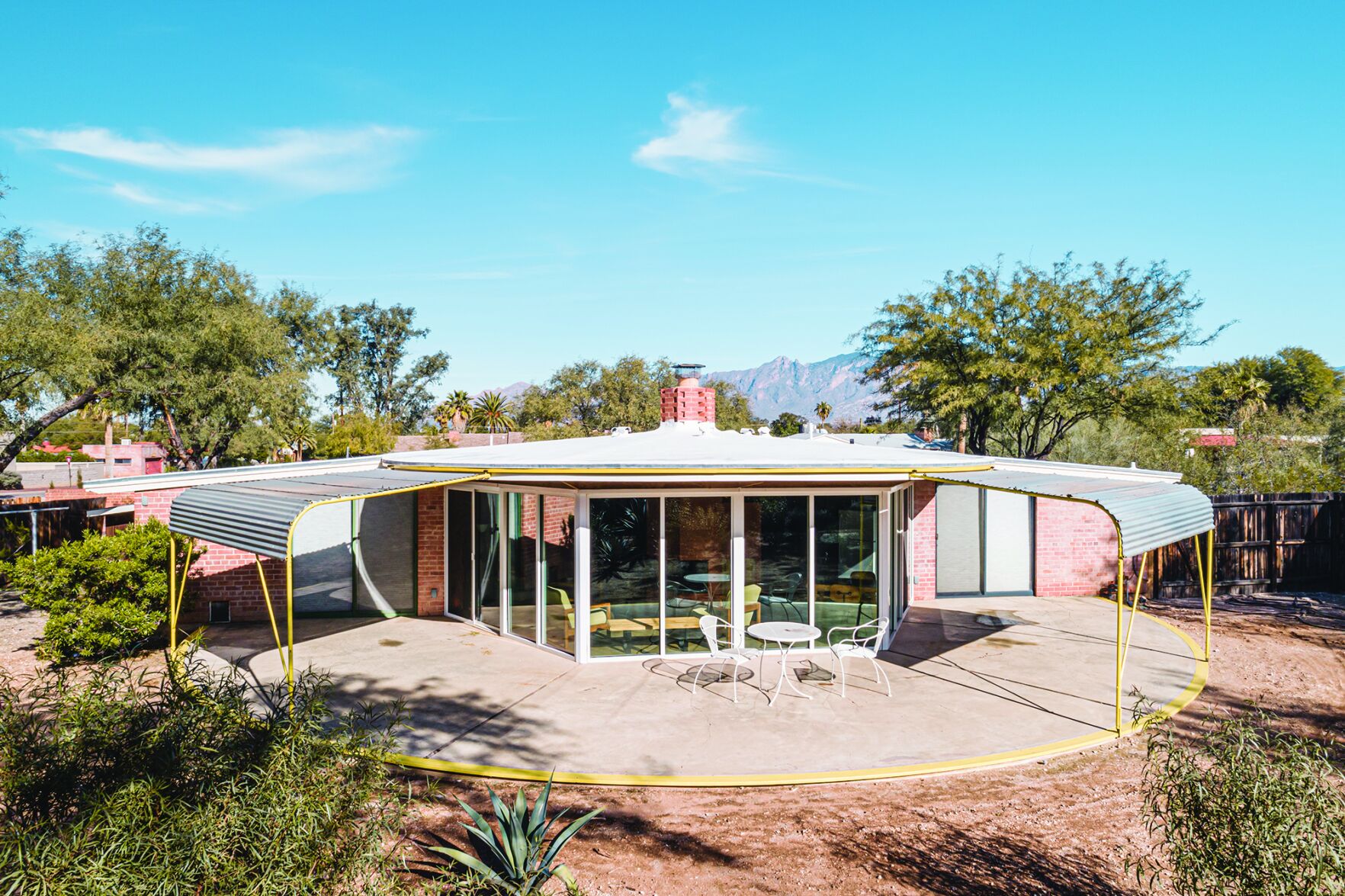
Faced with rising temperatures, prolonged drought and escalating building material costs, Tusconans are rethinking what actual “home improvement” means in this region.
“Tearing out a historic window, whether it’s a wood window or a steel window, sending that to the dump and then replacing it with a vinyl window that has a 20-year shelf life — the energy use is a net negative,” Clinco explained. “Thinking of things more holistically and ways to adapt the current material keeps the character of the building, but also has a net energy savings in the long run.”
Andrew Hayes, whose family’s Hayes Construction business has built and remodeled green homes in Tucson for decades, sees increasing interest in performance-driven remodeling, even if that’s often not the first goal.

Built to work with the desert sun, the Ball-Paylore House’s curved eaves and operable shade structures showcase passive solar design strategies that minimize heat gain and maximize seasonal comfort.
“It is rare for someone to remodel solely to improve energy efficiency and/or water efficiency,” he said. “It is usually tied in with another condition they are trying to correct, like creating additional space or changing the flow of a room.”
That said, Hayes usually starts out by recommending clients take a look at their home’s air sealing.
“A leaky house uses so much energy to heat and cool, and to have that leak out of the house through loose fitting windows and doors is such a waste,” he said. “As for water efficiency, upgrading toilets to new lower flow products and repairing fixtures that leak can do wonders for reducing water consumption. It’s hard to believe how much water can be wasted by a simple dripping faucet or hose spigots.”

“None of the stuff is new,” says rainwater harvesting expert Brad Lancaster. “It’s all ancient practices — but ones that we forgot.”
From high-efficiency insulation to smart HVAC design, Hayes said modern comfort expectations and sustainable building techniques that prioritize long-term efficiency and resource conservation typically go hand in hand.
“The better we insulate and reduce the demand on the air conditioner, the more comfortable it can be in the home,” he said. “A lot of the ‘green’ elements are focused on longevity because the less you have to replace something, the less material is needed in the long run.”
As for what advice Hayes typically gives a homeowner starting a remodel who wants to make their home more resilient to heat, water scarcity and rising utility costs — without blowing their budget — he emphasizes that simple actions are often just as effective.
“It really is the little things,” he said. “If it isn’t in the budget to replace faucets and shower fixtures to low flow, then simply ensure the fixtures you have aren’t leaking.”
He’s also a fan of Lancaster’s water harvesting techniques. “Although it isn’t a lot, use the water that falls from the sky. This can be as simple as a gutter to guide it to a row of bushes that you can then remove from the irrigation. Small steps add up. Don’t feel like you need to splurge on the highest efficiency AC replacement or most expensive water harvesting system. Many times, your money is better spent on simple fixes and repairs that make your home run more smoothly.”
After all, Tucson’s historic architecture was inherently climate-responsive, Clinco said, because it had to be.
“In Barrio Viejo, where you have vernacular adobe architecture, the houses are built as flush front row houses that reduce heat gain because of the masking of those buildings together,” he explained. “It’s generally a centralized courtyard in the back. It sort of draws cool air in, because of the garden or water feature in the center. And it has very, very high ceilings to allow heat to rise.”
Even mid-century suburban homes in Tucson took solar orientation into account. “They were usually built on an east-west axis to reduce heat gain while giving views of the mountains,” said Clinco. “Those were all design choices that were made to make housing more responsive to our extreme climate.”
Lancaster agrees. “Why not get your roof and windows in relationship to one another so that they heat you in winter for free and they cool you in summer for free?” he asked. “Just the orientation can have a dramatic effect on comfort.”

Clerestory windows and exposed wood beams in the bedroom bring in natural light while maintaining thermal performance, proof that sustainable design can be simple and serene.
Lancaster, Clinco and Hayes all concur that the goal isn’t just about saving energy — it’s about building smarter homes that last longer and reflect Tucson’s distinct sense of place.
“Most people are irrigating their plants with drinking water — which they’re paying for,” said Lancaster. “Instead, use the water you’ve already used a little bit. You’re mimicking the planet’s hydrologic cycle. We should take inspiration from those natural systems.”
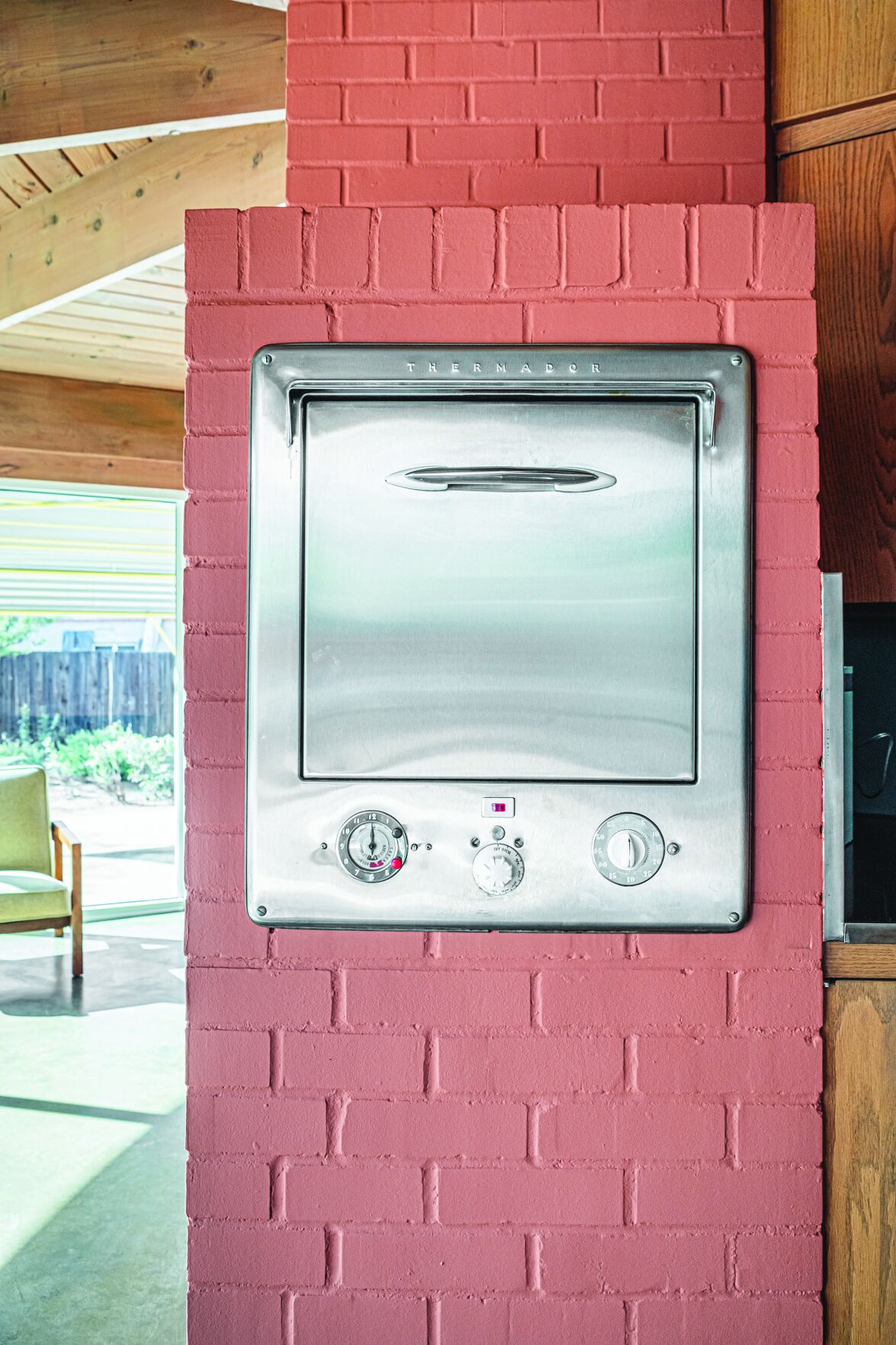
An original 1950s Thermador oven remains built into the brick wall, underscoring the home’s material longevity and design integrity — values often lost in today’s short-lived construction.
Fortunately, more and more Tucson homeowners seem to be recognizing the value of remodeling with local climate and culture in mind.
“Intuitively, when we sit near a window and feel a draft of warm air coming in, we understand that it isn’t comfortable,” said Hayes. “Our local service providers like TEP and Tucson Water have been doing a good job getting the word out to their customers about how important conservation is and ways to achieve it.”
Clinco sees preservation as both a climate strategy and a cultural responsibility.

“Materials today are not produced with the same quality that they were in historic periods of development in Tucson,” says Demion Clinco, CEO of the Tucson Historic Preservation Foundation.
“These buildings create a definitive character of what Tucson is and a feeling of this place that is irreplaceable,” he said. In the same way that “when you travel to Europe you want it to look like Europe,” Clinco stresses that remodeling in the American Southwest should retain the qualities people associate with this region.
“It’s about long-term sustainability,” he added. “And it’s about retaining the character and the sense of place that defines who we are as a city.”
Source link
By Jimmy Magahern, Inside Tucson Business Contributor Tucson’s past may hold the key to weathering its future | News www.insidetucsonbusiness.com
www.insidetucsonbusiness.com – Arizona Local News Results in news of type article 2025-08-08 07:15:00
+



GIPHY App Key not set. Please check settings